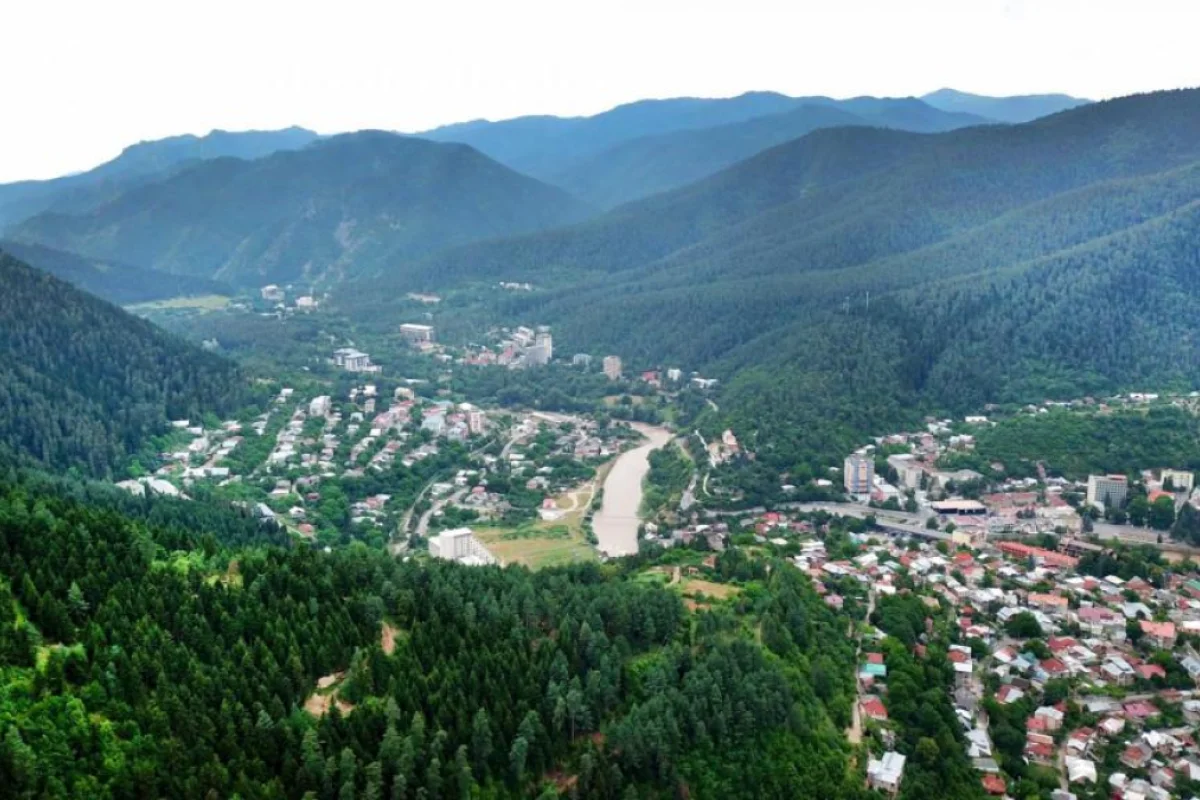
About Borjomi
ExploreBorjomi — History and City Development
Borjomi is a resort town in Georgia’s Samtskhe–Javakheti region and the administrative center of Borjomi Municipality. Set in the forested Borjomi Gorge, the town’s identity has always rested on three pillars: mineral springs, spa culture, and the routes that connect this valley to the rest of the country.
Ancient springs and the “rediscovery” in the 19th century
Archaeological references (often cited in overview histories) point to early use of Borjomi’s mineral waters—stone bathing features and long-standing local knowledge. Yet from the 16th to the 18th centuries the gorge was heavily affected by warfare and depopulation, and many places fell into relative obscurity.
Borjomi’s modern “new chapter” begins in the early 19th century, when the mineral springs returned to the center of attention in the context of Russian military presence. Accounts describe an 1829 episode in which soldiers found a spring on the right bank of the Borjomula and initiated cleaning and practical use.
The 1840s: the start of the spa-town framework (Golovin, Vorontsov)
A key turning point is the 1840s. Narrative summaries note that the Caucasus governor Yevgeny Golovin visited Borjomi in connection with treatment (his daughter is frequently mentioned in the story), and afterwards the springs moved toward a more civilian, resort-oriented administration.
Later, under Mikhail Vorontsov, Borjomi’s resort infrastructure expanded—parks, embankments, bridges, and the shaping of what is now associated with Borjomi’s central park tradition.
Likani, the Romanovs, and Borjomi’s “imperial” look
By the late 19th century Borjomi had become a favored summer retreat for aristocracy. Encyclopedic timelines report that in 1871 Borjomi was bestowed on Grand Duke Mikhail Nikolayevich; in the 1890s his son Nikolay developed the Likani estate with a park and chateau—an important layer in Borjomi’s resort architecture.
Mineral water, industry, and transport: Borjomi as a brand
Borjomi’s global fame rests on bottled mineral water: Georgian Wikipedia notes industrial bottling beginning in 1890, with infrastructure expanding in the decades that followed.
Transport was crucial. Sources note the Khashuri–Borjomi railway link (1894) and completion of the Borjomi–Bakuriani narrow-gauge railway (1902), now one of the town’s cultural symbols. The same timeline also references the Borjomi hydropower station (1898).
Town status (1918) and the Soviet era
A major administrative milestone is 1918, when Borjomi received town status.
After 1921, Soviet authorities converted many aristocratic mansions into sanatoria, and Borjomi developed as a major spa destination. Overviews also mention the damaging 1968 flood, after which Borjomi continued to grow through the Soviet period.
Nature and protected areas: Borjomi–Kharagauli National Park (1995)
Borjomi is not only mineral water—it is also forests and mountain landscapes. The Borjomi–Kharagauli National Park was established in 1995, described as the first national park created in independent Georgia.
This strengthened Borjomi’s role as a gateway for hiking and eco-tourism, alongside its classic spa-town identity.
Borjomi today: “spa + park + routes”
Today, Borjomi’s profile blends:
mineral water and the central park tradition,
the national park and outdoor routes,
connections toward Bakuriani and broader Samtskhe–Javakheti itineraries.
Official travel pages present Borjomi as a place where nature, resort heritage, and walkable town rhythms come together.
FAQ
Q: When did Borjomi gain town status?
A: In 1918.
Q: When did industrial bottling of Borjomi water begin?
A: In 1890.
Q: What is the significance of 1894 and 1902?
A: 1894 — Khashuri–Borjomi railway link; 1902 — Borjomi–Bakuriani narrow-gauge railway completed.
Q: When was Borjomi–Kharagauli National Park established?
A: In 1995.
Sources
Encyclopedic & general overview
Wikipedia — Borjomi
https://en.wikipedia.org/wiki/BorjomiEncyclopaedia Britannica — Borjomi (water) / Chiatura-style history notes on springs and bottling (Borjomi water page)
https://en.wikipedia.org/wiki/Borjomi_(water)
Spa-town formation (1840s; Golovin/Vorontsov)
Atinati — Borjomi Central Park (1842; Golovin; Vorontsov works)
https://www.atinati.com/news/6850eef58443db0038fb0bbd?lang=en
Rail / infrastructure timeline (1894; 1902; 1898; 1918)
Georgian Wikipedia — Borjomi (dates and infrastructure milestones)
https://ka.wikipedia.org/wiki/ბორჯომი
Protected areas
National Parks of Georgia — Borjomi–Kharagauli National Park
https://nationalparks.ge/en/site/borjomi-kharagaulinpWikipedia — Borjomi–Kharagauli National Park (1995; 2001 inauguration detail)
https://en.wikipedia.org/wiki/Borjomi-Kharagauli_National_Park
Official tourism overview
Georgia Travel (Official) — Borjomi (KA page, but official content)
https://georgia.travel/ka/კურორტები/ბორჯომი