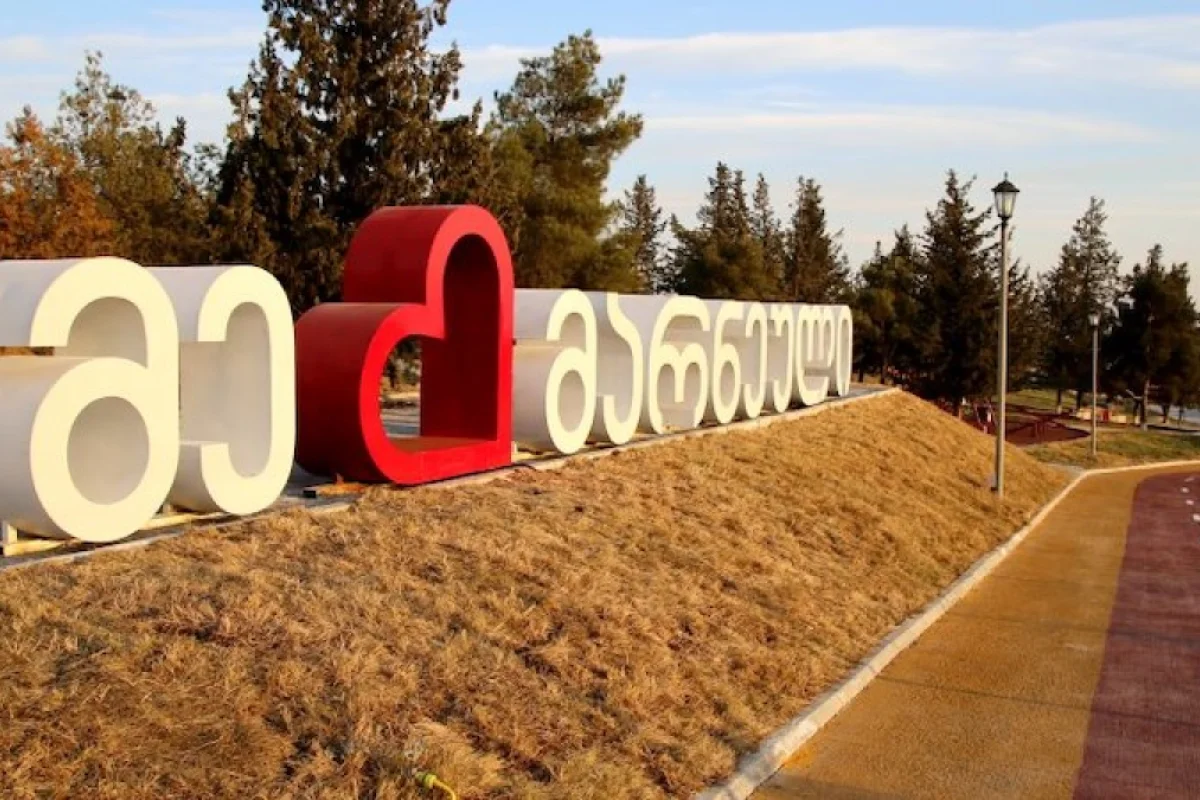
About Marneuli
Explore🇬🇧 Marneuli — History and City Development
Marneuli is one of the key cities of Kvemo Kartli and the administrative center of Marneuli Municipality in southern Georgia. Its role is strongly shaped by geography and connectivity: the city lies on the Algeti River and sits close to the main transport corridors leading from Tbilisi toward Georgia’s southern borderlands. Because of this position, Marneuli has long functioned as a regional junction—supporting agriculture, trade, mobility, and cultural exchange between neighboring areas. (https://en.wikipedia.org/wiki/Marneuli)
Ancient habitation and early farming traditions
The wider Marneuli area is often described as a place with very early traces of human habitation, linked to long-standing farming and pastoral traditions in the open lowland landscapes of Kvemo Kartli. Official travel overviews typically highlight the region’s deep settlement timeline and the importance of agriculture as a historical and modern foundation. (https://georgia.travel/cities-towns/marneuli)
Borchaly and the modern name “Marneuli”
Marneuli’s historical identity is frequently discussed within the broader context of Borchaly, a traditional name associated with parts of southern Kvemo Kartli. In the Soviet period, the city’s modern toponym was formalized: sources note that on 18 March 1947 the settlement’s name was changed from Borchalo to Marneuli, and in 1964Marneuli received city status. (https://en.wikipedia.org/wiki/Marneuli)
The name also carries layered interpretations in everyday usage: Georgian associations often connect “Marneuli” with marani (a traditional wine cellar/storehouse), while Azerbaijani usage may refer to the city with local variants, reflecting the area’s multicultural character. (https://en.wikipedia.org/wiki/Marneuli)
Marabda battlefield and a major 17th-century episode
North of Marneuli, the Algeti valley landscape is tied to the Battle of Marabda (1625)—a major event linked to Georgian resistance against Safavid Iran. In Georgian historical memory, Marabda is often recalled as a tragic yet significant episode of national struggle, and Marneuli’s proximity to this setting adds a notable historical layer to the area. (https://en.wikipedia.org/wiki/Marneuli)
Early 20th century: strategic terrain and conflict lines
Due to its open terrain and transport lines, the surrounding area remained strategically important into the 20th century. Sources note that during the Georgian–Armenian War (1918), fighting occurred near the Khrami River on 19 December 1918, underscoring how this region repeatedly appeared in broader political-military shifts. (https://en.wikipedia.org/wiki/Marneuli)
A multicultural city: languages, communities, and religion
Today Marneuli is widely recognized for its ethnic and religious diversity. Municipal information highlights a mixed population including Georgians, Azerbaijanis, Armenians and others; it also notes that Islam (particularly within the local community) and Orthodox Christianity are both prominent in the municipality’s public life. (https://marneuli.gov.ge/index.php?m=600)
In broader demographic discussions, Marneuli is often mentioned as one of Georgia’s major centers with an Azerbaijani population, which is clearly reflected in everyday culture—language, markets, cuisine, and community traditions. (https://en.wikipedia.org/wiki/Azerbaijanis_in_Georgia)
Landmarks: Imam Hussein Mosque and nearby heritage sites
A notable cultural landmark is the Imam Hussein Mosque, often presented in tourism materials as an important religious site for the community in Kvemo Kartli. (https://georgia.travel/marneuli-imam-hussein-mosque)
Within the wider municipality, travel overviews also highlight sites such as Gagi Fortress, adding a medieval heritage dimension to the region beyond the city itself. (https://georgia.travel/gagi-fortress)
Marneuli today: agriculture, markets, and a “gateway” role
Modern Marneuli continues to be described as a strong agro-commercial zone: the surrounding plains support intensive agriculture, while proximity to Tbilisi and southern routes reinforces the city’s role as a regional gateway. For visitors, this is often experienced through the everyday rhythm of local markets, the multicultural atmosphere, and the landscape of fields and villages that frame the city.
FAQ
Q: Where is Marneuli located?
A: Marneuli is in Kvemo Kartli, southern Georgia, on the Algeti River and near key transport routes linking Tbilisi with the south. (https://en.wikipedia.org/wiki/Marneuli)
Q: When did the city get its current name and city status?
A: Sources note a name change from Borchalo to Marneuli in 1947, and city status granted in 1964. (https://en.wikipedia.org/wiki/Marneuli)
Q: What major historical event is associated with the area?
A: The Battle of Marabda (1625) took place nearby in the Algeti valley, a significant episode in Georgian history. (https://en.wikipedia.org/wiki/Marneuli)
Q: What makes Marneuli culturally distinctive?
A: The city and municipality are known for multicultural communities and religious diversity, with a strong Azerbaijani cultural presence alongside other groups. (https://marneuli.gov.ge/index.php?m=600)
Q: What key landmark should I know about?
A: The Imam Hussein Mosque is one of the best-known cultural and religious sites highlighted in travel materials. (https://georgia.travel/marneuli-imam-hussein-mosque)