About Zestaponi
ExploreZestaponi — History and City Development
Zestaponi is a city in Georgia’s Imereti region and the administrative center of Zestaponi Municipality. The city sits in the Kvirila River valley, and its modern identity is closely linked to two powerful drivers of growth: transport (rail) and industry (metallurgy). In Zestaponi’s case, the railway created the conditions for urban expansion, while the rise of ferroalloy production later anchored the city as one of Georgia’s key industrial centers.
(General overview: Georgian Wikipedia; English Wikipedia.)
Early layer: first mentions and the origin of the name
Local historical summaries note that Zestaponi is first mentioned in written sources in the 16th century. The origin of the name is commonly explained through the phrase “Upper bank/upper side” (Georgian: “ზედა ფონი”)—a reference to the upper bank area of the Kvirila River.
In the 1820s, the same local account mentions a Cossack military post in the area (“Kvirila post”), and the settlement’s name is also associated with “Kvirila” during that period. Later, in the 20th century, the name “Jugh(i)eli” appears briefly in the local narrative, before Zestaponi’s historical name became firmly re-established.
19th century: from a riverside locality to an urban-type settlement
According to Georgian Wikipedia, Zestaponi began transforming into an urban-type settlement from the 1860s. This period fits the broader regional shift in western Georgia, when administrative structures, infrastructure, and long-distance movement intensified—making river valleys and transport corridors increasingly important for settlement growth.
The railway as a city-making factor
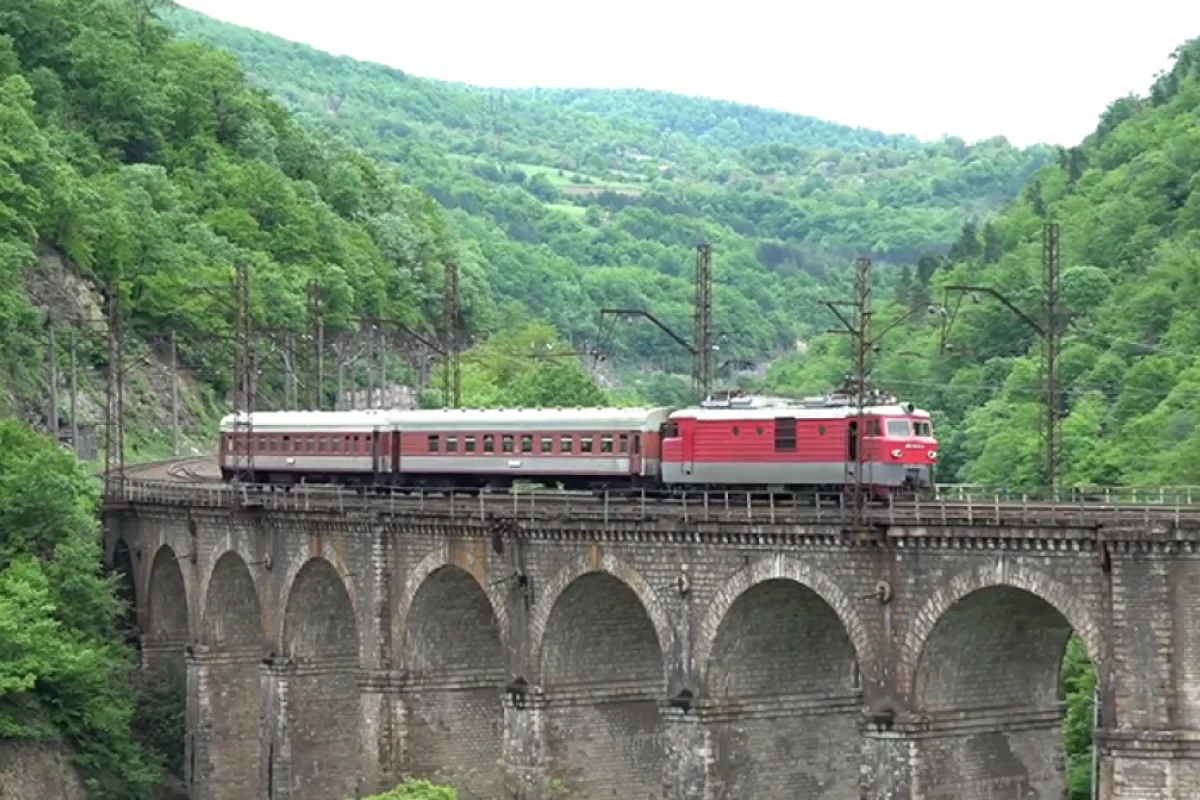
Zestaponi’s development is strongly tied to the early history of Georgia’s railways. The general railway timeline notes that operations started in 1871 on the Poti–Kvirila section—where Kvirila is identified as present-day Zestaponi.
From that “spine,” the network expanded, and the timeline also records the Zestaponi–Chiatura rail link in 1895, which is directly connected to moving manganese ore from Chiatura—an important precursor to industrial expansion in the area.
Names and administrative status
Georgian Wikipedia notes that until 1937, the settlement was officially known at different times as “Kvirila” and “Jugh(i)eli”, while local usage traditionally kept the name Zestaponi.
The same source states that Zestaponi received city status in 1917, and that it was finalized/confirmed in 1926.
The industrial era: the Zestaponi Ferroalloy Plant
A defining layer of Zestaponi’s 20th-century urban growth is the Zestaponi Ferroalloy Plant. The company history page (Georgian Manganese) states that:
construction began in 1931;
the first casting day was October 30, 1933, officially considered the first day of plant operation.
This matters for the city’s development because Zestaponi’s transport advantages (rail connections) combined with proximity to the Chiatura manganese region—turning the city into a stable industrial hub, shaping employment, housing patterns, and the overall urban rhythm.
Zestaponi and Shorapani: historical neighborhood
English Wikipedia points out that Zestaponi is located near Shorapani, a historically significant fortress locality. This adds an extra historical background layer: the “newer” industrial-transport city stands close to an older defensive and settlement landscape.
FAQ
Q: When is Zestaponi first mentioned in historical sources?
A: Local municipal summaries note the 16th century.
Q: What does the name “Zestaponi” mean?
A: It is linked to “Upper bank/upper side” (Georgian “ზედა ფონი”), referring to the upper bank area of the Kvirila River.
Q: When did Zestaponi gain city status?
A: Georgian Wikipedia states 1917, finalized in 1926.
Q: Why is Zestaponi considered an industrial city?
A: Because of the ferroalloy plant: construction started in 1931, and the first casting day was Oct 30, 1933.
Sources
Encyclopedic & general overview
Wikipedia — Zestaponi
https://en.wikipedia.org/wiki/ZestaponiGeorgian Wikipedia — ზესტაფონი
https://ka.wikipedia.org/wiki/ზესტაფონი
Early history / name origin
Zestaponi Municipality — Zestaponi history (16th century mention; “Upper bank/ზედა ფონი”; “Kvirila post”)
https://zestafoni.gov.ge/page/54/
Railway era (1871; 1895)
Wikipedia — Georgian Railway (1871 Poti–Kvirila; 1895 Zestaponi–Chiatura)
https://en.wikipedia.org/wiki/Georgian_Railway
City status / names
Georgian Wikipedia — ზესტაფონი (city status 1917; finalized 1926; names Kvirila/Jugh(i)eli)
https://ka.wikipedia.org/wiki/ზესტაფონი
Industry (ferroalloy plant)
Georgian Manganese — History of Zestafoni Ferroalloy Plant (1931; 1933-10-30)
https://www.gm.ge/en/%E1%83%98%E1%83%A1%E1%83%A2%E1%83%9D%E1%83%A0%E1%83%98%E1%83%90/