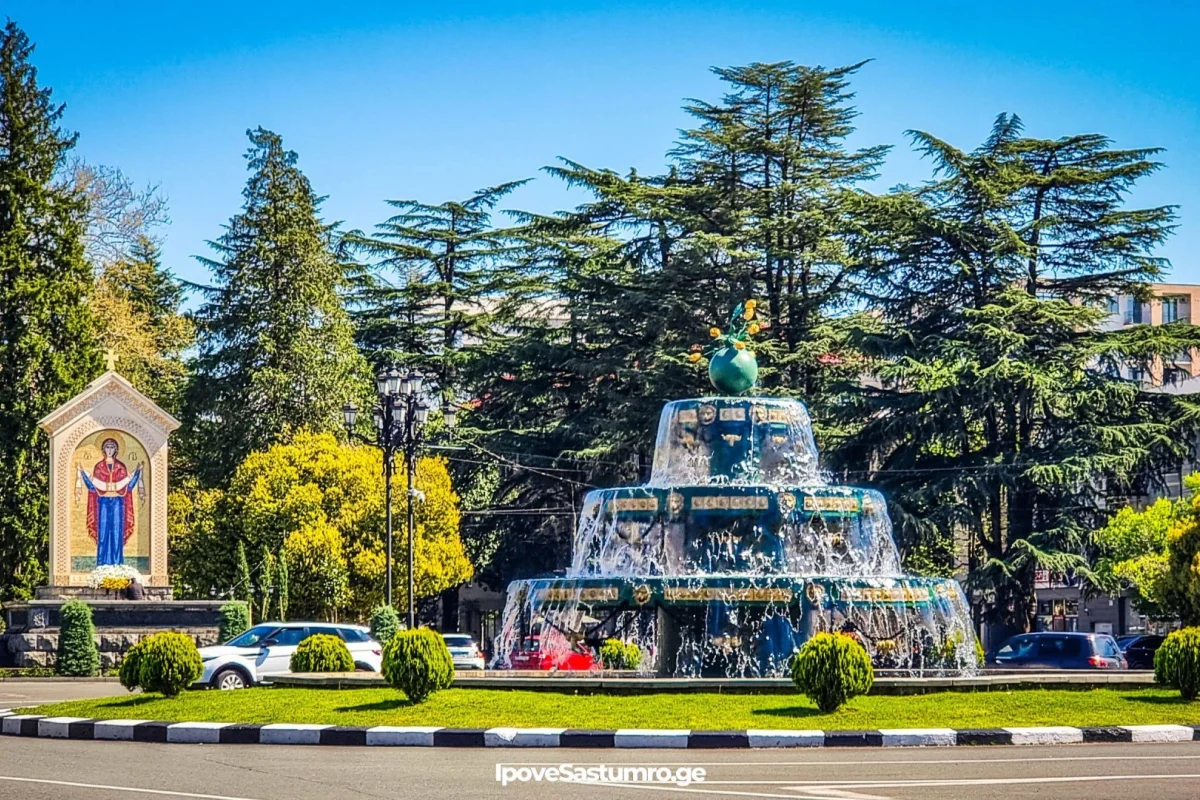
About Zugdidi
ExploreZugdidi — History and City Development
Zugdidi is one of the main cities of the Samegrelo–Zemo Svaneti region and a key cultural center of historic Samegrelo (Odishi). The city’s identity is most clearly expressed through the heritage of the House of Dadiani: the Dadiani Palaces complex (today a museum) is not only an architectural landmark but also a “mirror” of Western Georgia’s political and cultural history—how local elites shaped a European-oriented court culture, how the region modernized in the 19th century, and how a princely residence became a public institution.
Odishi/Samegrelo and the Dadiani residence
Georgia’s official tourism platform describes the Dadiani Palace as one of the first European-style palaces built in the historical territory of Odishi, known today as Zugdidi. It notes that the structure was built in the 17th century and underwent a major restoration in the 1860s, led by an English architect—an episode often highlighted as a turning point in the complex’s modern appearance.
Today the complex functions as the Dadiani Palaces History and Architecture Museum and includes several interconnected elements—principal palace buildings (including the palace associated with Princess Ekaterine), a church, and the botanical garden.
19th century: European aesthetics and urban modernity
Many summaries emphasize that the palace we see today reflects a 19th-century transformation of an older residence. Wikipedia’s overview describes the Dadiani Palace as a Neo-Gothic building, constructed in the 17th century and renovated in the 19th, with the “present form” tied to work by an English architect in the 19th century. This “European” architectural language—combined with local motifs—became one of Zugdidi’s defining visual signatures.
Zugdidi also carries a recognizable “European biography” through the Dadiani family’s international connections, frequently mentioned in museum narratives and travel overviews.
The museum as a regional memory center
The palace complex is widely known as a museum space. The National Parliamentary Library of Georgia’s Dadiani digital resources note that with the start of Soviet administration in 1921, interest in using the palace as a museum increased, and describe the early museum formation process in May 1921. This makes Zugdidi not only a “palace city” but also a place where Samegrelo’s heritage was curated into a public institution.
Zugdidi Botanical Garden: subtropical landscape and historic garden culture
Adjacent to the residence, Zugdidi Botanical Garden is one of the city’s strongest experiences—where architecture, landscape, and the region’s humid subtropical climate come together. Several sources connect the garden’s formation to the 19th century and the Dadiani residence: Georgian Travel Guide describes it as a 19th-century decorative garden linked to the princely residence, while Wikipedia notes that it was built in the late 19th century and developed as part of the estate landscape.
A European historic gardens profile links the garden’s history directly to the residence of Samegrelo’s rulers, underlining its status as a heritage landscape rather than “just” a city park.
FAQ
Q: Why is Zugdidi historically important?
A: Zugdidi is closely linked to the House of Dadiani and their palace complex, one of the key heritage sites of Samegrelo (Odishi) and a major museum today.
Q: When was the Dadiani Palace built and restored?
A: Official overviews note construction in the 17th century and a major restoration in the 1860s, which shaped much of its modern look.
Q: When did the palace become a museum?
A: National Parliamentary Library resources describe increased museum use starting in 1921, including a museum-related initiative in May 1921.
Q: What is special about Zugdidi Botanical Garden?
A: It is a historic garden connected to the Dadiani residence, with strong 19th-century roots and a rich collection of plants suited to the region’s climate.