



Batumi Archaeological Museum
Link copied
Photograph: Aleksey Muhranoff (CC BY-SA 3.0), Jonathan Cardy (CC BY-SA 3.0)
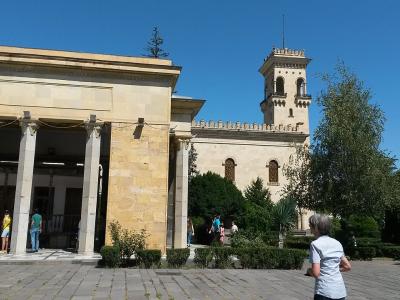
The museum of the archaeology of Adjara in Batumi, at 77 Ilia Chavchavadze Street: 22,800 objects from the Stone Age to the Middle Ages, finds from the Colchian, Greek and Hellenistic cemeteries of Pichvnari, Greek and Roman coins from Gonio-Apsaros including the "Gonio hoard", a statue of Serapis, the Khelvachauri hoard and, since 2014, the Gold Fund; it opened to the public in 1994 and since 1998 has excavated Pichvnari together with the Ashmolean Museum of Oxford.
About
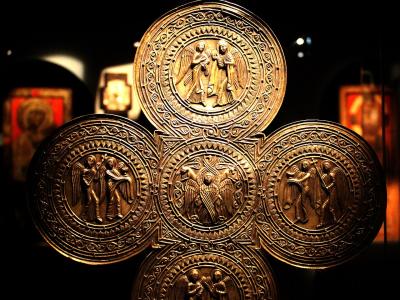
The Batumi Archaeological Museum is at 77 Ilia Chavchavadze Street. Its holdings comprise 22,800 objects and finds from the whole of Adjara, from Pichvnari, Namcheduri, Khikhadziri, Kvashta and other sites, material from joint Georgian-British excavations and chance finds from the Stone Age to the Middle Ages: coins, vessels of clay, glass, gold and bronze, Roman statues, chased icons, crosses, a relief of St George from old churches, and Greek signet rings with images of Hermes, Aphrodite and Eros.
The second floor of the building shows objects of the Stone Age (the Acheulean period) and the Iron Age, most of them of the Colchian culture. The first floor holds objects of antiquity and of the early and late Middle Ages found in excavations of the ancient and medieval fortresses of Adjara, among them finds from the ancient town of Pichvnari and its Colchian (fifth century BC), Greek (fifth–fourth centuries BC) and Hellenistic (fourth–third centuries BC) cemeteries. Here are Greek and Roman vessels of antiquity and Greek and Roman coins from the excavations at the Gonio-Apsaros fortress, including the "Gonio hoard", found by archaeologists beside one of the fortress walls. Here too are Roman sculptures, an image of the Hellenistic god Serapis, glass and bronze vessels and Roman jewellery.
Highlights of the display are the Khelvachauri hoard, which points to contacts between Adjara and the Arab world in the early Middle Ages, and the Gold Fund, opened in 2014, of gold coins and jewellery. Besides the exhibition, the museum has a restoration laboratory, a photo archive and a research library.
- Focus
- The archaeology of Adjara from the Stone Age to the Middle Ages: the Pichvnari settlement and cemeteries, coins and the hoard from Gonio-Apsaros, the Khelvachauri hoard, Greek and Roman vessels, coins and sculpture, the Gold Fund
History
The archaeological collection from the excavations in Adjara has a history of more than a hundred years, but it was put on display for the wider public only in 1994, when the museum was founded. Since 1998 the joint Pichvnari expedition of the Batumi Archaeological Museum and the Ashmolean Museum of the University of Oxford has been at work, enriching the holdings with new finds. At the end of 2007 a permanent scientific exhibition opened in the museum, introducing visitors to the earliest history and culture of Adjara by period. In 2014 the museum was renewed after reconstruction, and the Gold Fund opened the same year.
Visit info
The museum is in Batumi at 77 Ilia Chavchavadze Street. The exhibition is laid out on two floors, the Stone and Iron Ages on the second and antiquity and the Middle Ages on the first. Check the opening hours and ticket prices with the museum by phone or on site before visiting.
Safety
Do not touch the cases or the exhibits; check the photography rules on site and do not use flash.
Tip
The museum is a good start before visiting the Gonio-Apsaros fortress, since the coins from its excavations, among them the Gonio hoard, are kept here. On the first floor look for the finds from Pichvnari and the image of Serapis, and on the second for the objects of the Stone and Iron Ages, most of them of the Colchian culture; the Khelvachauri hoard is also on display.
Sources
Nearby places
All places in the region
Places of the same kind
Museum — all places
Nearby settlements