



Petra Fortress
Link copied
Photograph: AlexandreAssatiani (CC BY 4.0), Kober (CC BY-SA 4.0)
The Byzantine fortified town of Petra on rocky seaside hills in the village of Tsikhisdziri, 8 kilometres south of Kobuleti: Petra Pia Justiniana, founded in 535 under Justinian I and a battleground of the Lazic War (541–562), taken by Khosrow I in 541 and besieged from 551 by Bessas, who recaptured and razed it. The citadel, a sixth-century three-nave basilica with a mosaic floor, a bath and more than 300 burials survive.
About
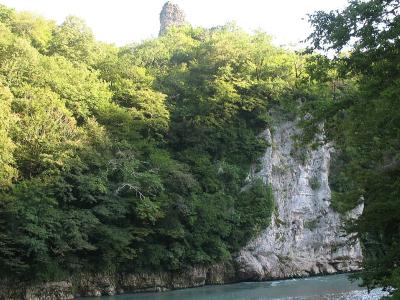
The ruined town of Petra lies in Kobuleti municipality, in the village of Tsikhisdziri between Kobuleti and Batumi, on rocky seaside hills. The name means "stone, rock" in Greek: the acropolis stood between the sea and sheer cliffs and could be approached from land only across a narrow stretch of level ground defended by a wall with two towers, which is why Petra was thought impregnable. The town was built on two neighbouring hills joined by double walls; the citadel is about 200 metres long and 100 metres wide.
In the citadel are the ruins of a palace, an ancient bath, service buildings and soldiers' quarters, among them the foundations of a sixth-century three-nave basilica, 33 metres long and 17.80 metres wide, with a narthex, a projecting apse and a mosaic floor: the cathedral of the bishopric of Petra. Near the basilica are a sixth-century bath (9.5 × 6.5 metres) and a cistern, and the remains of two more churches, one early Christian and one of the High Middle Ages. North of the citadel lie the remains of an urban settlement and more than 300 burials. The monument is protected as the Tsikhisdziri–Petra Archaeological and Architectural Museum Reserve.
The layers of the Tsikhisdziri site run from the Late Bronze Age and the Colchian culture to the Middle Ages: to the north, at Boboqvati, 200 metres from the sea, are dune settlements of the eighth century BC, and Attic pottery has come from amphora burials of the fifth century BC. The third-century treasure found here in 1907, gold jewellery, silver and bronze vessels, beads and coins, is in the Hermitage in Saint Petersburg; among it is a rock-crystal intaglio with the image of the Roman emperor Lucius Verus. Some accounts date the find to 1908.
- Period
- A fortified town from 535; settlement from the Late Bronze Age to the Middle Ages
- Excavations/notes
- 1934 S. Janashia, 1953 N. Khoshtaria, systematic study from 1962; the Tsikhisdziri treasure found in 1907 is in the Hermitage
History
Petra is first mentioned in the Novels of Justinian I of 535. It was built to strengthen Roman authority in the kingdom of Lazica and with the emperor's approval was named Petra Pia Justiniana; according to Procopius, the city was founded through the efforts of the Roman official John Tzibus, who then took tight control of imports into Lazica, salt among them. This drove the Lazic king Gubazes to the Sasanians, and in 541 the army of Khosrow I invaded: after a first assault the Persians brought down the towers through a secretly dug tunnel and took the city.
In 548 Justinian, this time allied with the Lazi, sent Dagisthaeus; the siege lasted until 549 without success. In 551 a Roman–Lazi army under Bessas began a second siege; after more than a year the city fell, and Bessas razed the fortress to prevent it again becoming a Persian target. Yet the archaeology of Tsikhisdziri suggests that the town lived on into the seventh century and beyond, and the walls were repaired more than once. The bishopric of Petra, founded in the sixth century, was subject to the Patriarchate of Constantinople; Bishop John of Petra attended the council of 692, and in the ninth century the see moved to Khinotsminda.
The identification of Tsikhisdziri with Petra was proposed in the 1670s by the Patriarch Dositheos II of Jerusalem, shared later by Marie Brosset and Dimitri Bakradze and set on a scholarly footing by Simon Janashia in 1949; some scholars, among them Simon Kaukhchishvili, reject it. In 1745 Prince Vakhushti described the "Devils' Fortress" here. In the Russo-Turkish War of 1828–1829, in September 1829, Ahmed Pasha repulsed an attack by the Russian general Karl Hesse here, and in the war of 1877–1878 the Ottomans on the heights of Tsikhisdziri halted the Russian attacks of 12 April 1877 and 18 January 1878. Exploratory excavations were made on the site in 1934 by Simon Janashia and in 1953 by N. Khoshtaria, and systematic study began in 1962.
Visit info
Tsikhisdziri is on the Black Sea coast 8 kilometres south of Kobuleti, between Batumi and Kobuleti, about 15–23 kilometres from Batumi. The ruins are on the village's rocky seaside hills and are protected as a museum-reserve; check the opening hours and ticket price before visiting. Tsikhisdziri is also a summer resort village with a sea beach.
Safety
The seaside hills have steep rocky edges, so keep to the paths and hold children by the hand. Do not climb on the ruined walls. After rain the rock is slippery.
Tip
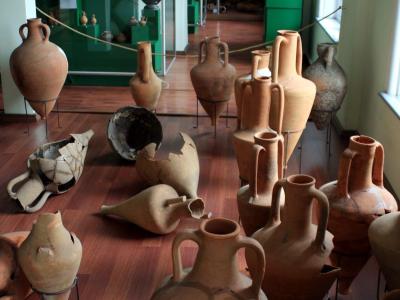
The 33-metre foundation of the basilica and the bath are the chief sights of the citadel, and from the rocky hill the view opens over the Black Sea. To read the site, recall the story of the Lazic War in advance: the tunnel of 541 and the siege begun in 551 were decided on these very rocks. The objects of the Tsikhisdziri treasure are in the Hermitage; the site museum keeps finds from the excavations, among them architectural details, mosaic fragments, pottery and coins.
Sources
Nearby places
All places in the region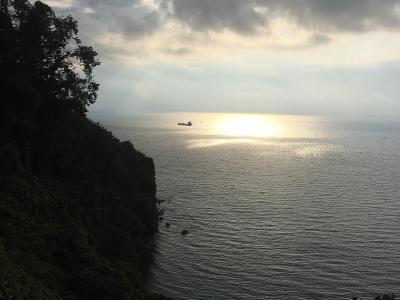
Places of the same kind
Archaeological Site — all places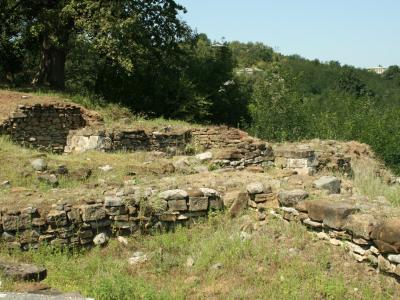
Nearby settlements