



Javakheti National Park
Link copied
Photograph: Stratovara (CC BY-SA 4.0), Saba Sakhvadze (CC BY-SA 4.0), Anri137 (CC BY-SA 4.0)
A national park on the Javakheti Plateau, in Akhalkalaki and Ninotsminda municipalities, on the border with Armenia and Turkey, covering 14,200 hectares: a treeless country of volcanic mountains, lakes and marshes, founded in 2011. It forms part of the Javakheti Protected Areas together with the managed reserves of the Khanchali, Bughdasheni and Madatapa lakes and the Kartsakhi and Sulda marshes; 140 species of nesting and migratory birds occur here, and it is the only protected area in Georgia where flamingos can be seen.
About
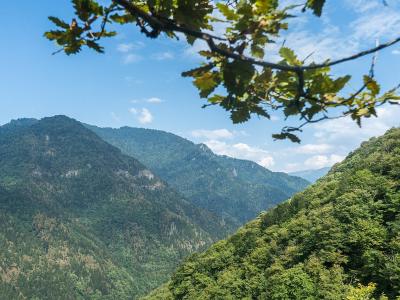
Javakheti National Park lies on the Javakheti Plateau, within Akhalkalaki and Ninotsminda municipalities, on the border with Armenia and Turkey; it covers 14,200 hectares. The park was founded on the initiative of the Agency of Protected Areas, is in IUCN category II and forms part of a transboundary protected area: on the Armenian side it adjoins Lake Arpi National Park. Besides the park, the Javakheti Protected Areas include the managed reserves of the Khanchali, Bughdasheni and Madatapa lakes and of the Kartsakhi and Sulda marshes, and the area holds five of the country’s eight largest lakes. Didi Abuli, 3,300 metres high, also rises within the park.
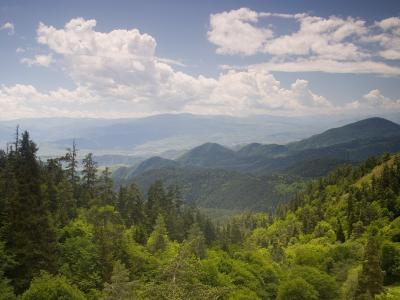
Javakheti is a treeless land: planted pine stands and fragments of natural forest are thinly scattered. The most important natural subalpine forest grows by Kartsakhi Lake on the Georgian–Turkish border, with birch, Caucasian rowan and thickets of dog rose and raspberry. The Kartsakhi and Sulda marshes formed mostly as lakes turned into tussock bogs, and are covered by tall sedge. In the mountain steppes and steppe meadows around Kartsakhi Lake, Dasiphora fruticosa was found in 2004, a plant of the rose family that grows nowhere else in Georgia. In the subnival zone of the Samsari range 62 plant species have been recorded, including 3 local and 14 Caucasian endemics, and 19 local endemic species grow in the park as a whole.
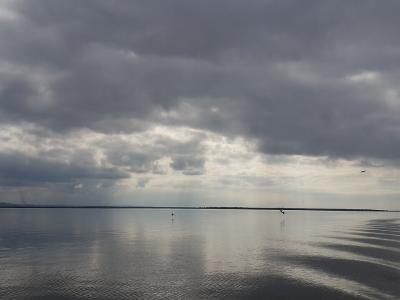
140 species of nesting and migratory birds occur in the park, and the plateau is one of the main bird migration routes. The Madatapa, Khanchali and Kartsakhi lakes are the realm of waterbirds: 59 species have been recorded on Kartsakhi Lake, 20 of them waterfowl, 21 on the Kartsakhi marsh (6 waterfowl) and 15 on the Sulda marsh (8 waterfowl). Thousands of coots, grebes, wild geese and ducks of many kinds rest on the lakes; on Madatapa and Kartsakhi cranes and Dalmatian pelicans can be watched, beside them are huge colonies of Armenian gulls, and white storks build their nests right in the villages, on electricity poles and house roofs. 12 species of fish live in the lakes. Of almost 40 species of mammals, 10 are carnivores and 2 ungulates; the otter, hare, badger, fox and wolf are widespread, while the globally vulnerable marbled polecat has been recorded only in the border zone, around Madatapa Lake.
- Main routes
- Kartsakhi Lake (3 km, easy); Sulda Marsh (5 km, easy); Khanchali Lake (3 km, easy); Bughdasheni Lake (2 km, easy); Lake Madatapa (22 km, loop, moderate); Mount Madatapa (18 km, hard); Tiger Canyon (15 km, hard, by prior arrangement)
- Access notes
- Administration: Akhalkalaki, Ninotsminda–Kartsakhi crossroads No. 1; 216 km from Tbilisi, 139 km from Borjomi
- Official info URL
- https://nationalparks.ge/ka/site/javakhetinp
History
Javakheti National Park was founded in 2011. The project was carried out by the Georgian government in cooperation with WWF and with financial support from the German government, and local authorities and communities also take part in managing the area. The park’s purpose is to conserve the natural environment, but projects in drinking water supply, energy, livestock farming, the sale of local products and tourism are also carried out within it. In 2019 the managed reserves of Paravani Lake, Saghamo Lake and Abuli Lake were added to the Javakheti Protected Areas; the Sulda marsh managed reserve, like the other four managed reserves of the Javakheti Protected Areas, is a potential Ramsar site.
Human interference has left its mark here. In the 1980s several families of muskrats were released into Khanchali Lake; they multiplied fast and reached almost every body of water in Javakheti, and the harm they have done to the local ecosystem has still not been studied. In the early 1990s the local authorities drained part of Khanchali, the warmest lake in Javakheti and only 80 centimetres deep, for hay meadows. It was a true ecological disaster: tens of thousands of wild birds never returned to their nesting grounds, and the problem remains unresolved to this day.
The park’s mountains also hold traces of a far older past: on the summit of Mount Madatapa, a volcanic cone 2,714 metres high, the remains of a circular megalithic structure can be made out.
Visit info
The park administration is in the town of Akhalkalaki, at the Ninotsminda–Kartsakhi crossroads (No. 1); the visitor specialist’s phone number is 577 64 04 82. From Tbilisi to the park is 216 kilometres (3 hours 53 minutes by car), from Borjomi 139 kilometres (2 hours 24 minutes) and from Batumi 413 kilometres (6 hours 53 minutes); from Akhalkalaki to the village of Kartsakhi is 29 kilometres, and from Ninotsminda to Gorelovka 11 kilometres. Opening hours: May to September 10:00–18:00, April and October 10:00–17:30, November to March 10:00–17:00, daily except Mondays.
The park has 7 hiking, riding and cycling routes, many of them with birdwatching towers. The Kartsakhi Lake trail (3 km, easy) runs from the park’s Kartsakhi entrance along the lake shore to the watchtower and returns by a loop. The Sulda Marsh trail (5 km, easy) leads from the Sulda managed reserve through the village of Miasnikiani to the marsh. The Khanchali Lake trail (3 km, easy) follows the shore from the village of Patara Khanchali, at 1,920 metres above sea level. The Bughdasheni Lake trail (2 km, easy) goes from the centre of Gorelovka along the shores of the lake, at 2,040 metres, to the watchtower. The Lake Madatapa loop (22 km, moderate) starts in the village of Sameba and follows the eastern shore to a cape with a picnic site and a watchtower. The Mount Madatapa trail (18 km, hard) climbs from Sameba to a plateau at 2,300 metres. The Tiger Canyon trail (15 km, hard) climbs from Patara Khanchali along the canyon’s eastern ridge to a panoramic viewpoint where you can spend the night; it can be extended towards a mountain 2,980 metres high where the borders of Georgia, Armenia and Turkey meet.
Accommodation: three 8-bed cottages in the Tetrobi forest managed reserve and two by Kartsakhi Lake, 30 lari per person per day; a tent pitch costs 10 lari and a picnic site 20 lari a day. Tents (20 lari), sleeping bags (10 lari), binoculars (10 lari) and electric bicycles (50 lari) can be hired; bicycles and snowshoes are hired out at the visitor centre. Sport fishing on Kartsakhi Lake costs 10 lari per person per day, with a daily limit of up to 10 kilograms. Check prices and conditions locally.
Safety
The Javakheti Plateau is the coldest of Georgia’s inhabited places, and its lakes stay frozen for a long time in winter, so dress warmly. Wear trousers of coarse fabric and high boots, and carry food, water and an identity document. The Tiger Canyon route may be walked only by arrangement with the park administration and the border police. Keep to the marked trails; the park forbids bringing in firearms and pets, collecting plants, rocks and fossils, disturbing wildlife, lighting fires outside designated places, and moving fast when visibility is poor (fog, tall grass). The emergency number is 112.
Tip
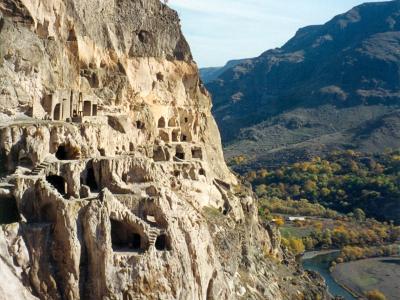
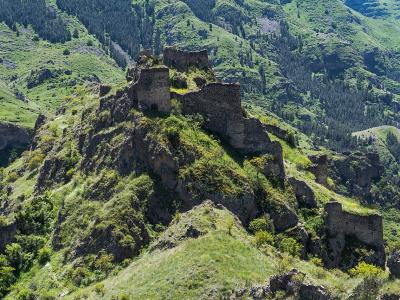
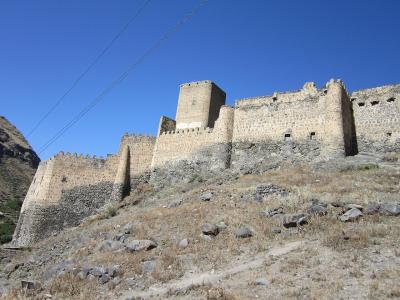
The tourist season runs from April to November; April–November is best for birdwatching and May–October for sport fishing, while in winter snowshoe trails await. Arrange any route with the Javakheti National Park administration before setting out, and hire binoculars at the visitor centre. Near the park are the ruined fortress town of Akhalkalaki (eleventh century), Kumurdo monastery (tenth century) 10 kilometres from Akhalkalaki, the rock-cut monastery of Samsari (eighth–ninth century) 22 kilometres, Khertvisi fortress 25 kilometres and Vardzia 40 kilometres from Akhalkalaki, and the twelfth-century Qaurma bridge (170 metres long) 7 kilometres from Ninotsminda.
Sources
- Javakheti National Park — Agency of Protected Areas
- Nature and culture — Javakheti National Park
- How to get there — Javakheti National Park
- Visitor guide — Javakheti National Park
- Javakheti National Park — Georgian Wikipedia
- Javakheti National Park — English Wikipedia
- Javakheti National Park — georgia.travel
- Javakheti National Park — Wikidata
Nearby places
All places in the region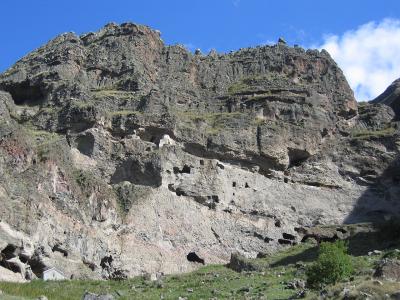
Places of the same kind
National Park — all places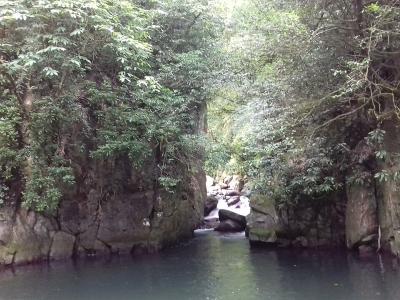
Nearby settlements