



Paravani Lake
Link copied
Photograph: Yasuhiro Kojima (CC BY-SA 4.0), Fif' (CC BY-SA 2.0), Sarah Murray (CC BY-SA 2.0)
A volcanic-tectonic lake in Ninotsminda municipality, in the northeastern part of the Javakheti volcanic highland, between the Samsari and Javakheti ranges, at 2,073 metres above sea level: by surface area (37.5 square kilometres) the largest lake in Georgia. It is shallow (3.3 metres at most), freezes in winter and is rich in fish; Poka, Vladimirovka, Tambovka and Rodionovka stand around it, and the Poka monastery on its shore.
About
Paravani Lake lies in the northeastern part of the Javakheti volcanic highland, in a basin between the Samsari and Javakheti ranges, at 2,073 metres above sea level. Its surface covers 37.5 square kilometres and its drainage basin 234 square kilometres; the average depth is 2.2 metres and the maximum 3.3 metres, and the lake holds 91 million cubic metres of water. The shoreline is indented and runs from northeast to southwest; the bottom is almost flat and slowly deepens in the same direction, and the northern and eastern shores are low and unbroken.
The basin formed when a young Pleistocene lava flow from the Samsari range dammed a river valley; over time its floor was covered by lake sediments several tens of metres thick. The catchment is built of heavily fissured volcanic rock under mountain-meadow chernozem soils, and its vegetation is mostly grassland. Because of the harsh climate, the only tree that grows around the lake is the Caucasian pine. Despite the shallow water, aquatic plants are poorly developed, which is put down to the strong winds and the lack of sheltered bays.
The lake is fed by snow, rain and groundwater. Small rivers flow into it, the Shaori, the Sabadostskali and the Paravnistskali, along with several seasonal streams, and from its southern end flows the Paravani river, a right tributary of the Mtkvari, which carries 45 million cubic metres of water out of the lake each year. The water is fresh (80 mg/l). The level is lowest in October–November and highest in May–June. From December the lake is covered all winter by thick ice, from 47 to 73 centimetres thick.
The lake is rich in fish and popular with anglers: trout, carp, khramulya, whitefish, Kura barbel and other species live here. The villages of Poka, Vladimirovka, Tambovka and Rodionovka stand around the lake; on its shore is the Poka monastery, nearby the Shaori fortress, and east of the lake the Paravani caravanserai. The snow-capped Abuli mountain towers over the lake.
- Access notes
- 132 kilometres from Tbilisi; in winter an off-road vehicle is needed to reach the lake
History
The lake is also known as Taparavani and Tba-Paravani; an obsolete Russian form is Toporovan, and in Western Armenian it is called Parvana. Its basin was created in the Pleistocene, when a lava flow from the Samsari range dammed a river valley.
Old structures survive around the lake: the Cyclopean fortresses of Abuli and Shaori and, east of the lake, the Paravani caravanserai. By some accounts, geophysical surveys have revealed a large structure on the lake bed, which a scientific expedition identified as a Bronze Age burial ground.
In 2019 the Paravani Lake managed reserve was created within the Javakheti Protected Areas, together with the managed reserves of the Saghamo and Abuli lakes.
Visit info
The lake is in Ninotsminda municipality, 132 kilometres from Tbilisi. By car it is 136 kilometres from Tbilisi to the village of Poka (about 139 minutes), 28 kilometres from Ninotsminda (27 minutes) and 48 kilometres from Akhalkalaki (47 minutes). In winter an off-road vehicle is needed to reach the lake. Most of the villages around the lake offer accommodation, though you may prefer to pitch a tent, light a fire and fry the fish you have caught. In winter there is ice fishing, mainly for whitefish. Check locally for fishing rules and the state of the ice.
Safety
The lake lies at 2,073 metres, and the climate here is harsh and cold, with strong winds, so bring warm clothes even in summer. Go onto the ice only after checking its thickness with local people, and do not set out in winter without an off-road vehicle.
Tip
In winter, when the lake freezes hard enough to walk on, snowshoeing along its shores is especially beautiful; snowshoes cannot be hired on the spot, so bring your own and hire a trained local guide. The Poka monastery sells herbal teas, local natural products and handmade crafts. From the lake you can also visit the nearby Cyclopean fortresses of Abuli and Shaori.
Sources
Places of the same kind
Lake — all places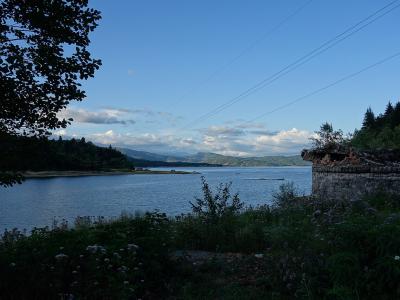
Nearby settlements