



Oni Local Lore Museum
Link copied
Photograph: Yasuhiro Kojima (CC BY-SA 4.0)
The principal museum of Racha, founded in 1948 and opened in 1952, in Oni on Rustaveli Street: 15,500 objects from the Stone Age to the twentieth century, among them a Bronze Age figurine of a ram, openwork astral buckles and bull figurines, reliefs from the tenth- and eleventh-century churches of Mravaldzali, coins of the tenth to fourteenth century, a nineteenth-century manuscript of The Knight in the Panther's Skin and canvases by Shukhaev, Japaridze and Nalbandian, now housed in a new building raised for 5.5 million lari.
About
The Oni Local Lore Museum is the principal museum collection of Racha and stands in the centre of the town at 26 Shota Rustaveli Street. Its holdings run to 15,500 objects, which follow the history of the province from the Stone Age through the late feudal period to the twentieth century. The heart of the collection is the Bronze Age, since the mountains of Racha were one of the main centres of Colchian bronze: a bronze figurine of a ram, openwork astral buckles, bull figurines, women's jewellery and parts of weapons and tools. The Middle Ages are represented by architectural details and relief fragments from the tenth- and eleventh-century churches of St George and the Holy Trinity of Mravaldzali, by coins of the tenth to fourteenth century and by manuscript books, among them a nineteenth-century manuscript of The Knight in the Panther's Skin.
The ethnographic section shows the life of Racha in the nineteenth century: wooden vessels, peasant tools, clothing and textiles, photographs of the wooden houses and churches of Racha. The painting hall holds canvases of Georgian artists of the twentieth century, Vasily Shukhaev, Sergo Chakhoiani, Valentin Sherpilov, David Nalbandian, Ucha Japaridze and others, landscapes of Racha among them.
The museum was created in 1948 and opened in 1952. At the beginning of the 2020s a new building was raised for it for 5.5 million lari: two bright halls for the permanent and temporary exhibitions, a conference hall with a stage, a library and media library, a children's space and storage, and in its plan a ticket office, a shop and a café as well.
- Focus
- The archaeology of Racha from the Stone Age to the late feudal period, Bronze Age openwork buckles and figurines, architectural fragments of Mravaldzali of the 10th–11th century, coins of the 10th–14th century, manuscripts, ethnography, Georgian painting of the 20th century
- Opening hours
- Tuesday to Sunday 10:00–17:00, closed on Monday
History
The museum was created in 1948 and opened in 1952. Over the decades its holdings grew with the archaeology of Racha, ethnographic objects from the villages, architectural fragments of the tenth- and eleventh-century churches of Mravaldzali, coins, manuscript and printed books and canvases by Georgian painters of the twentieth century, and today the number of objects reaches 15,500.
At the beginning of the 2020s a new building was completed for the museum, in whose design and construction the state invested 5.5 million lari: two exhibition halls for permanent and temporary displays, a conference hall with a stage, a library and media library, a children's space and storage.
Visit info
The museum is in the centre of Oni; its address is usually given as 26 Shota Rustaveli Street, but one visitor reported in 2026 that the new building stands 200 metres away on Kalianidze Street, so confirm by phone before coming. Oni is about four hours from Tbilisi and about 110 kilometres from Kutaisi, with marshrutkas from the Kutaisi bus station and from Tbilisi. The museum is open Tuesday to Sunday from 10:00 to 17:00 and closed on Monday; a ticket costs a few lari, a guided tour 10 lari, and entry is free for children under 6, people with disabilities and displaced persons. One to two hours are enough for the visit.
Safety
Do not touch the cases or the exhibits, and photograph without flash. The road to Oni through the Rioni valley is icy in winter and rockfalls are frequent, so check the weather.
Tip
In the bronze hall a guided tour is worth it, since the astral signs on the openwork buckles are hard to read without explanation. See the Mravaldzali reliefs here and then go up to the church itself to picture them in place. The manuscript of The Knight in the Panther's Skin and the landscapes of Racha are in the painting hall. The museum, the synagogue and the old Jewish cemetery of Oni fit into half a day.
Sources
Nearby places
All places in the region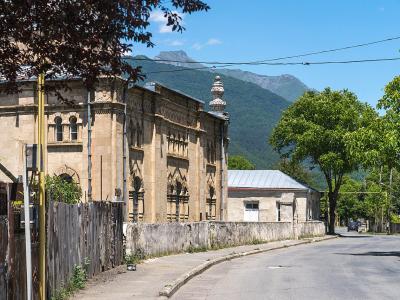
Places of the same kind
Museum — all places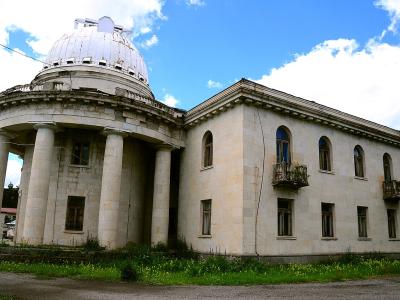
Nearby settlements