



Sataplia Nature Reserve
Link copied
Photograph: Surprizi (CC0), Jon Gudorf (CC BY-SA 2.0), Aleksey Muhranoff (CC BY-SA 3.0), FingerWiki (CC BY-SA 4.0)
The "place of honey" 10 kilometres from Kutaisi: a reserve founded in 1935 by Petre Chabukiani, with the crater of an extinct volcano, relict Colchian forest, a 900-metre karst cave discovered in 1925 and some 200 dinosaur footprints in Cretaceous limestone; since 2010–2011 with a visitor centre, a park of dinosaur models and a glass viewing platform jutting over the cliff.
About
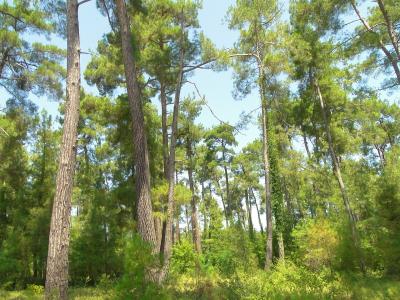
The Sataplia Strict Nature Reserve lies in Tskaltubo Municipality on the land of the villages of Gumbra, Banoja and Khomuli, on Mount Sataplia, 10 kilometres north-west of Kutaisi and 500 metres above sea level, and forms part of the Imereti Caves Protected Areas together with Prometheus Cave. The name comes from honey: wild bees nested in the holes and caves of the mountain, and the locals gathered the honey. The reserve is of complex character, uniting geological, palaeontological, speleological, zoological and botanical monuments: its area is about 350 hectares, of which 348 are forest, a relict Colchian forest of beech, chestnut, hornbeam, elm, box, zelkova, alder, lime and oak with impassable undergrowth and lianas; among the animals live jackal, marten, badger, fox, hare and squirrel, and roe deer and wolf come in occasionally. On the mountain are the crater of an extinct volcano and a Stone Age dwelling site.
The reserve is rich in karst caves, of which only one of five is open, at heights of 275–405 metres; the main cave, discovered in 1925, is 900 metres long, 300 metres of it explored along a lit and secured path among stalactites and stalagmites, in air that stays cool all year. The reserve's chief rarity is the set of some 200 footprints of predatory and herbivorous dinosaurs impressed in marly limestone, discovered by Petre Chabukiani in 1933 and belonging to the Cretaceous period; a special pavilion protects them, with a bio-speleological museum beside it. In 2010–2011 the reserve was fitted out for tourists: a visitor centre, a café in the middle of the park, a small museum, a park of life-size dinosaur models and, at the highest point of the mountain, a glass viewing platform jutting over the cliff edge, from which Kutaisi, the Colchian lowland and the Greater Caucasus can be seen.
- Access notes
- 10 kilometres from Kutaisi, by the village of Banoja; visitor centre and parking at the entrance; open daily from 10:00
- Best season
- All year
- Permit required
- No
- Ticket required
- Yes
- Parking available
- Yes
- Amenities
- Parking, Ticket office
- Safety notes
- The cave floor is wet, so wear closed shoes with grip; keep to the marked trails
History
The main cave of Sataplia was discovered in 1925, and the dinosaur footprints in 1933 by the Kutaisi local historian and museum worker Petre Chabukiani, who in those same years also cleared Bagrati Cathedral of earth; on his initiative the Sataplia reserve was founded in 1935 to protect the newly discovered cave, the Colchian forest and the geological and archaeological monuments, and in 1957 it was enlarged to its present borders. A speleological expedition of the Vakhushti Institute studied the caves thoroughly, and in 1937 Kandelaki and Dzotsenidze published the karst caves of Tskaltubo and Sataplia.
In Soviet times the reserve was a favourite excursion from Kutaisi, and in the 1990s it fell into neglect; in 2010–2011 the Sataplia managed reserve was fully fitted out for tourists, with the visitor centre, museum, dinosaur park, glass platform and cave lighting, and since April 2011 the reserve has been, with Prometheus Cave, among the most visited natural monuments of Imereti.
Visit info
Sataplia is 10 kilometres from Kutaisi, by the village of Banoja in Tskaltubo municipality, about 20 minutes by car and also reached by marshrutka from Kutaisi; parking is at the visitor centre. The reserve is open every day: 10:00–18:00 in spring, 10:00–19:00 in summer and 10:00–17:00 in autumn and winter. Entry is by ticket; prices are published on the site of the Agency of Protected Areas, and a combined ticket covers the Prometheus, Sataplia and Navenakhevi caves. On the grounds are two trails, a museum, exhibition halls, the building that protects the dinosaur footprints, the cave and a glass panoramic platform. Prometheus Cave is 9 kilometres away.
Safety
The cave floor is wet and the paths climb and descend the slope, so bring closed shoes with grip and a light jacket and hold the rail; do not touch the stalactites. The glass platform is hard for those afraid of heights. Do not leave the marked trails, since the undergrowth on the slope is thick and there are karst sinkholes.
Tip
In the footprint pavilion look at the tracks of the two-legged predator and the four-legged herbivore side by side, and the guide will show the difference; the glass platform gives a view to the Caucasus on a clear day and nothing in fog. In the summer heat the cave is the best place to cool down. For children the dinosaur park is the main attraction.
Sources
Nearby places
All places in the region
Places of the same kind
Reserve — all places
Nearby settlements