



Church of St George of Ilori
Link copied
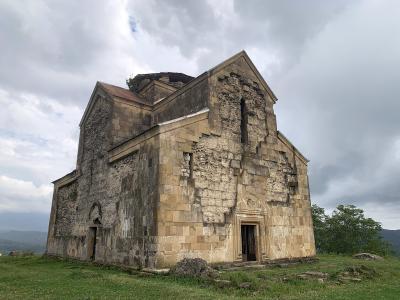
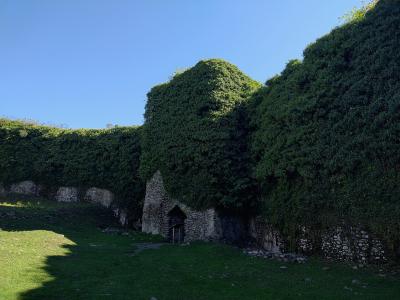
Photograph: Alaexis (CC BY-SA 3.0), Sergei Kazantsev (CC BY-SA 3.0), Patriarche Kirilll Juanisdze (Public domain), И. Барщевский (Public domain)
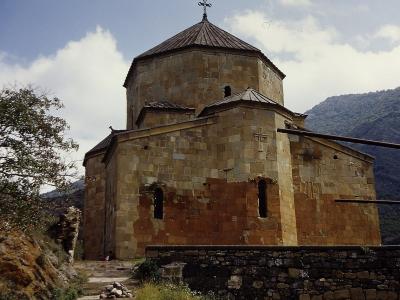
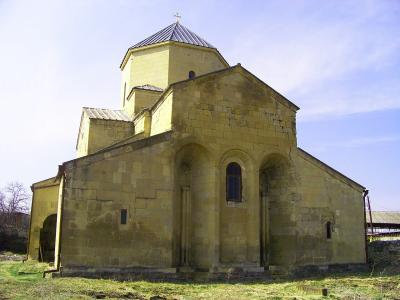
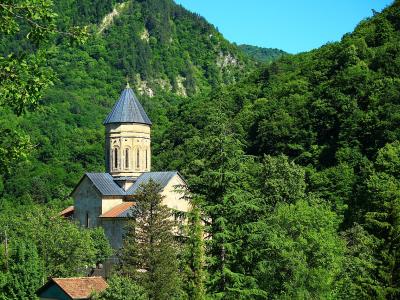
An eleventh-century hall church in the village of Ilori, one of the principal shrines of medieval western Georgia, famous for the miracle of the ox on St George's day and notorious for the "restoration" of 2010 that cost it its Georgian inscriptions and its historic appearance.
About
The church of St George of Ilori stands in the village of Ilori, in Ochamchire Municipality, south-east of Ochamchire and close to the sea. It is a hall church of the first quarter of the eleventh century, originally without a dome, one of the most important examples of western Georgian architecture and one of the principal shrines of medieval western Georgia. Vakhushti Bagrationi describes it as "a domeless church, small, rich and adorned"; Ilori is mentioned by Jean Chardin, Dubois de Montpéreux, Marie-Félicité Brosset, Andrei Pavlinov and Dimitri Bakradze, and in the twentieth century its architecture was studied by the art historian Anatoly Katsia.
The complex consists of the church and outbuildings; the precinct is enclosed by a cobble wall with a belfry over the gate. The east wall of the church carried five Georgian lapidary inscriptions recording its early history, and the interior held the remains of frescoes. Since the works of 2010 the façades are plastered and whitewashed, the east wall plastered over together with its inscriptions, the painting inside whitewashed, and a Russian-style dome set on the domeless building; air conditioners have been installed in the church. In 2009 the National Bank of Georgia issued a 10-lari collector coin for St George's day bearing the church of Ilori.
- Denomination
- Georgian Orthodox (canonically); held de facto by an unrecognised church body
- Century
- First quarter of the 11th century
History
The church was built in the first quarter of the eleventh century. Over the centuries it was altered several times: in the seventeenth century Levan II Dadiani, prince of Odishi, repaired it, in 1736 the Ottomans burnt it down, and in the second half of that century the princes of Odishi restored it again. Ilori was known above all for its feast of St George: every year on 21 October an ox "miraculously" appeared in the church and was sacrificed to the saint. Jean Chardin, who was here in 1672, describes how the bishop inspected the church on the eve of the feast and set a bucket before the door to show that no one had entered, and how in the morning an ox stood inside; part of the meat went to the kings of Imereti and Guria, part to the clergy and the people, and the behaviour of the ox foretold the coming year, war, fertility or a good vintage. The custom survived into the twentieth century.
The works carried out in the church in 2010 set off a dispute between Georgia and the de facto authorities: in Georgia's assessment the plastering of the façades and the Russian-style dome destroyed the monument's authenticity and hid its Georgian inscriptions and frescoes; the Georgian Ministry of Foreign Affairs called the works vandalism and appealed to UNESCO. The Abkhazian side did not deny the changes but did not admit irreparable damage; in February 2011, at the 25th meeting of the incident prevention mechanism, the Georgian side asked for access to the church and was refused, and in March 2011, at the 15th round of the Geneva discussions, the Abkhazian side presented photographs of the church before and after the works. On 9 February 2011 the de facto authorities handed the church to a church body not recognised by the Georgian Orthodox Church. The church of Ilori has the status of a monument of national significance of Georgia; as of 2022 regular services are held here and pilgrims come.
Visit info
Ilori lies south-east of Ochamchire, near the coast; the church stands in a precinct enclosed by a cobble wall. It is in use, with regular services, and pilgrims come here.
Abkhazia is an occupied territory. Under Georgian law entry to the region is lawful only through the Enguri crossing; entry from Russia is a breach of Georgian law. Check the current conditions of movement before travelling.
Safety
On feast days the precinct can be crowded. Dress rules are observed in the working church. Consular assistance in the occupied territory is limited.
Tip
Compare the church's appearance before 2010 and the Georgian inscriptions of the east wall in old photographs to understand what was lost. The cathedrals of Mokvi and Bedia are within an hour's drive, and Ochamchire about 4 kilometres away.
Sources
Nearby places
All places in the region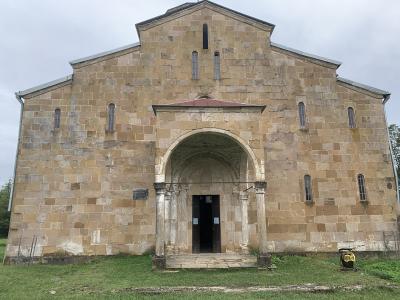
Places of the same kind
Church — all places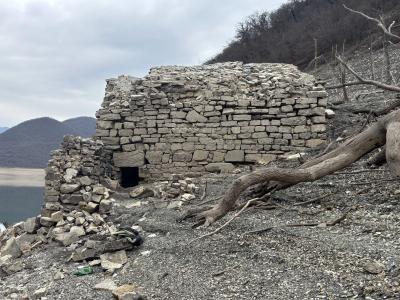
Nearby settlements