



Ozurgeti History Museum
Link copied
Photograph: M. (CC BY-SA 4.0), Grigol (CC BY-SA 3.0), Vaesgard (CC BY-SA 3.0)
The oldest of the seven museums of Guria, founded in 1924 on the initiative of Akaki Shanidze and grown from 1936 into the museum of local lore, with more than six thousand exhibits from the ninth millennium BC: Colchian axes and the Ureki hoard, the Ekadia inscription naming Kakhaber I Gurieli, a gold coin of Alexander the Great and coins of Queen Tamar, the French dagger of the Murats and the sword of the leader of the uprising of 1841.
About
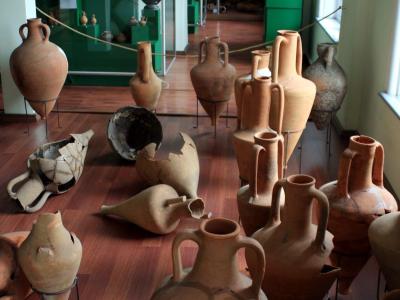
The Ozurgeti History Museum is the oldest of the seven museums of Guria and occupies, in the town of Ozurgeti on Giorgi Chanturia Street, the building of the former museum of military glory of the 18th Army, built in 1978–1981, into which it moved in April 1991; it has branches at Gurianta (2008), the ethnographic museum at Dvabzu (2009) and the Ekvtime Takaishvili museum at Likhauri (2010). The museum holds more than six thousand exhibits spanning from the ninth millennium BC to the present: Neolithic material, objects of the Early, Middle and Late Bronze Age of the Colchian culture, Colchian axes, hoes and rare pieces of bronze sculpture, gold and silver of the early classical age and part of the Ureki hoard, transferred in 1989. Here too are the asomtavruli inscription of the Ekadia church naming Kakhaber I Gurieli, patriarch of the Gurielis, water pipes, column capitals, a censer, window glass, brick and tile found at the Vashnari town site, and architectural details with ram's heads from the unnamed basilica of Dvabzu.
The numismatic collection holds Colchian tetri of the sixth to third centuries BC, a gold coin of Alexander the Great, coins of Giorgi III, Queen Tamar, Rusudan, Lasha-Giorgi, Simon I and Erekle II, Turkish akçes, the 144 coins of the Ozurgeti hoard, 10 Polish silver coins found at Tskhemliskhidi and Soviet money. Among the ethnographic, documentary, heraldic and fine art sections two relics stand out: the French dagger of the Murats and the "kama" of Ambako Shalikashvili, leader of the Gurian uprising of 1841, a sword 60 centimetres long with a blade 5 centimetres wide and a black 10-centimetre hilt inlaid with bone, bought by the museum in 1925, together with a war horn of the same uprising.
- Focus
- The archaeology of Guria from the Neolithic, Colchian bronze and the Ureki hoard, numismatics, ethnography, relics of the uprising of 1841
History
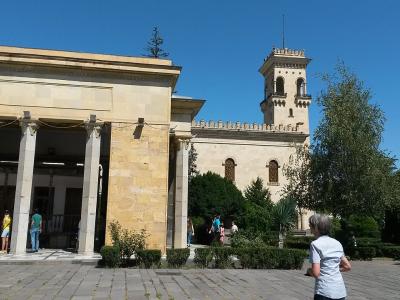
In April 1924, on the orders of the People's Commissariat of Education, Akaki Shanidze and Shalva Amiranashvili came to Guria to record its antiquities: most of the objects removed from churches and monasteries were kept in the building of the Ozurgeti district peasants' committee, and of the many treasures of Likhauri only part of one parchment manuscript survived. They toured Ozurgeti, Shemokmedi, Likhauri, Jumati, Baileti, Askana, Chokhatauri, Erketi and Khidistavi, took what survived to Tbilisi, and on Shanidze's initiative the Guria Ethnographic Museum was founded in Ozurgeti that same April, its collection founded on three manuscripts and two early printed books; the later fate of that museum is unknown. On 1 April 1936 the Makharadze museum of local lore was created on the basis of the society of Red Guards and partisans, which handed over 200 weapons, flintlock guns, pistols, daggers and swords; the museum occupied one small room in the town council building, then 402 square metres on the second floor of a building on Guria Avenue, and its first director, Nikoloz Samsonia, died in the Second World War.
In 1974 the museum moved into the palace of Dimitri Gurieli, in 1977–1978 Soviet and pre-revolutionary displays and departments of archaeology, ethnography, art, manuscripts and numismatics were set up, in 1989 material from the Ureki hoard was transferred from the Salkhino archaeological base, and in April 1991 it was housed in the building of the museum of military glory of the 18th Army. In August 2002 the museum was renamed the Ozurgeti History Museum; from 2002 to 2010 visitors could not be received because of a damaged roof, though research went on, and in those years the branches at Gurianta, Dvabzu and Likhauri opened.
Visit info
The museum is in Ozurgeti at 1 Giorgi Chanturia Street; minibuses run to Ozurgeti from Tbilisi and Batumi, and from Batumi it is about an hour by car. It is open daily from 10 to 18, and entry is free.
Safety
Do not touch the cases, and ask the staff whether photography is allowed.
Tip
The part of the Ureki hoard kept here and the Ekadia inscription are worth seeing before a day on the Ureki beach; the sword and war horn of Ambako Shalikashvili are relics of the uprising of 1841. The Likhauri branch is 10 minutes from the museum and Jumati half an hour.
Sources
Nearby places
All places in the region
Places of the same kind
Museum — all places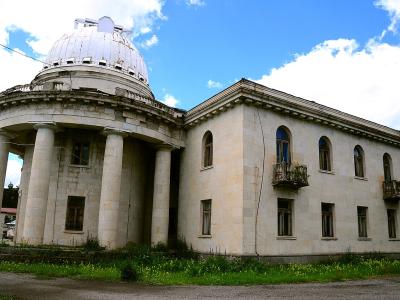
Nearby settlements