



 Museum
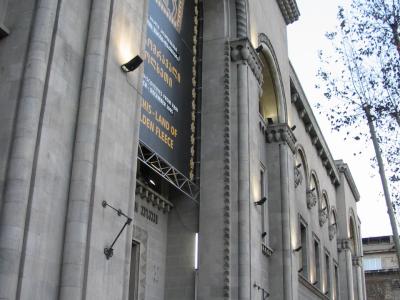
Georgian National Museum
Tbilisi Municipality, Tbilisi
A union of museums and research institutes, formed in 2004.
Fortresses, churches, national parks, waterfalls and museums, each with its history, location and map.
9 places shown · all on one page
Places are now sorted by distance, nearest first.
No place by that name.
Your location could not be found, so the places keep their usual order.
Museum
Tbilisi Municipality, Tbilisi
A union of museums and research institutes, formed in 2004.
 Museum
Gori Municipality, Shida Kartli
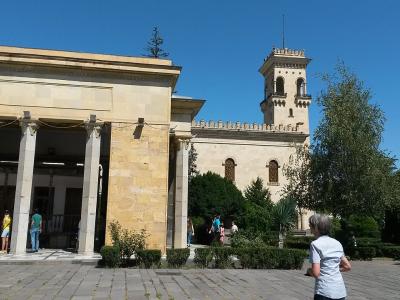
A state museum in the centre of Gori, the town where the Soviet leader Joseph Stalin (Jughashvili) was born in 1878. The complex takes in the small memorial house where he was born, opened as a museum in 1937 during his lifetime, a two-storey exhibition building with a tower, and Stalin's armoured personal railway carriage. The display largely keeps its Soviet-era character, and since 2010 a separate room of the museum has been devoted to the period of repressions.
 Museum
Adigeni Municipality, Samtskhe-Javakheti
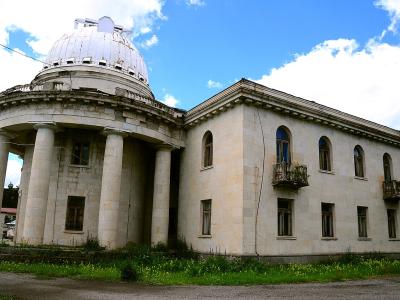
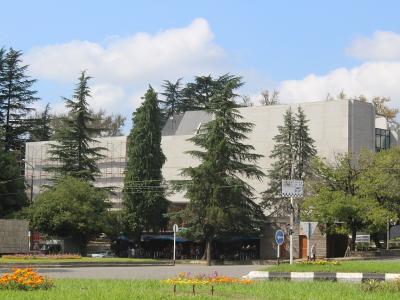
The Evgeni Kharadze Georgian National Astrophysical Observatory, on Mount Kanobili in Abastumani, 1,600–1,700 metres above sea level and 30 kilometres north-west of Akhaltsikhe. Founded in 1932, it was the first mountain astrophysical observatory of the former Soviet Union, and it is heir to the small observatory where Sergei Glazenap observed double stars in 1892–1893. On day and night astrotours visitors see the 40 cm refractor brought here in 1934, a working telescope that is now also a museum piece, and on clear nights look at the sky through it.
 Museum
Ozurgeti Municipality, Guria
The oldest of the seven museums of Guria, founded in 1924 on the initiative of Akaki Shanidze and grown from 1936 into the museum of local lore, with more than six thousand exhibits from the ninth millennium BC: Colchian axes and the Ureki hoard, the Ekadia inscription naming Kakhaber I Gurieli, a gold coin of Alexander the Great and coins of Queen Tamar, the French dagger of the Murats and the sword of the leader of the uprising of 1841.
 Museum
Mestia Municipality, Samegrelo-Zemo Svaneti
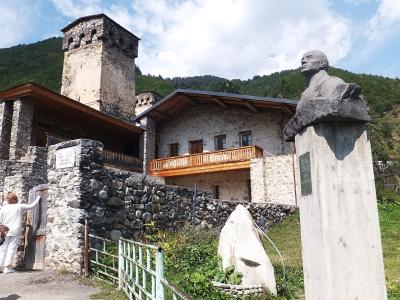
The memorial museum of the "Tiger of the Rocks", the seven-times USSR champion mountaineer Mikheil Khergiani (1932–1969), in the Lagami quarter of Mestia, in the Khergiani family machubi and tower: the household objects of the family, Khergiani's equipment and awards, a hall of Soviet mountaineering and, hanging in the tower, the red rope that broke on the Civetta in 1969; a single room from 1979, the full display from 1985.
 Museum
Mestia Municipality, Samegrelo-Zemo Svaneti
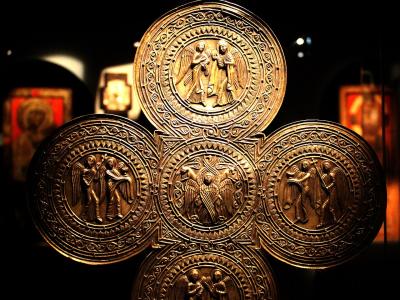
A museum in Mestia founded in 1936 on the antiquities of the church of St George of Seti: the richest collection of the medieval Georgian chased and painted icons that the churches of Svaneti kept for centuries, of the Adishi Gospels of 897 and other manuscripts, of Bronze Age archaeology and of Svan life, today part of the Georgian National Museum.
 Museum
Occupied
Sokhumi Municipality, Abkhazia
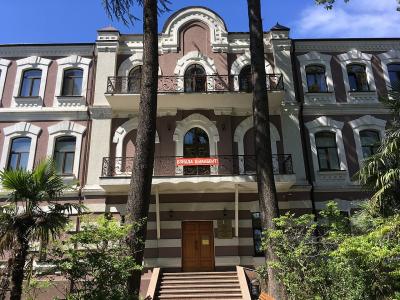
The regional museum of Sukhumi, opened in 1917 and granted state status in 1928: more than a hundred thousand objects, from the Acheulean site of Yashtkhva, the Eshera ossuary, the pottery of Tsebelda, the daggers of Lykhny and the fifth-century BC marble stela raised from the floor of Sukhumi bay to the twentieth century.
 Museum
Batumi Municipality, Adjara
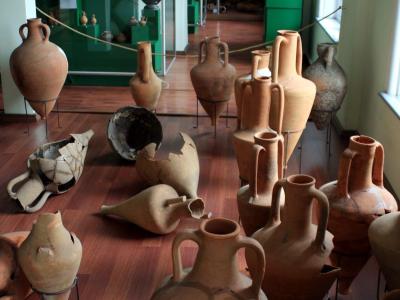
The museum of the archaeology of Adjara in Batumi, at 77 Ilia Chavchavadze Street: 22,800 objects from the Stone Age to the Middle Ages, finds from the Colchian, Greek and Hellenistic cemeteries of Pichvnari, Greek and Roman coins from Gonio-Apsaros including the "Gonio hoard", a statue of Serapis, the Khelvachauri hoard and, since 2014, the Gold Fund; it opened to the public in 1994 and since 1998 has excavated Pichvnari together with the Ashmolean Museum of Oxford.
 Museum
Oni Municipality, Racha-Lechkhumi and Kvemo Svaneti
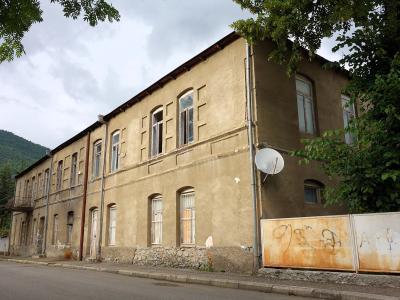
The principal museum of Racha, founded in 1948 and opened in 1952, in Oni on Rustaveli Street: 15,500 objects from the Stone Age to the twentieth century, among them a Bronze Age figurine of a ram, openwork astral buckles and bull figurines, reliefs from the tenth- and eleventh-century churches of Mravaldzali, coins of the tenth to fourteenth century, a nineteenth-century manuscript of The Knight in the Panther's Skin and canvases by Shukhaev, Japaridze and Nalbandian, now housed in a new building raised for 5.5 million lari.