
Places in Georgia

Fortresses, churches, national parks, waterfalls and museums, each with its history, location and map.

places
127
categories
24
regions
11

45 places shown · all on one page

Places are now sorted by distance, nearest first.

No place by that name.

Your location could not be found, so the places keep their usual order.

  • Church 626–635

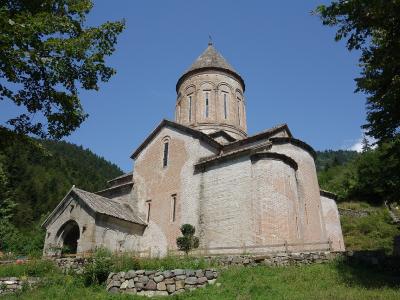
    Tsromi Church

    Khashuri Municipality, Shida Kartli

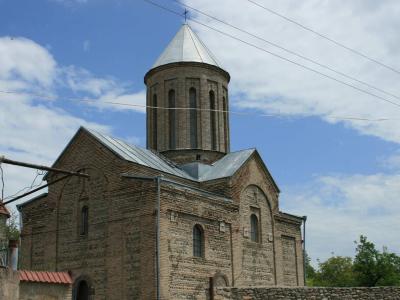
    An early medieval domed church in the centre of the village of Tsromi in Khashuri municipality, on the right bank of the Mtkvari, built in 626–635 at the order of Stepanoz II, presiding prince of Kartli. It is the first Georgian church whose dome rests on four free-standing piers, and the two deep triangular niches of its east façade, which appear here for the first time, later became a hallmark of Georgian church architecture. The conch of its sanctuary was decorated with a mosaic of Christ in Glory, whose surviving fragments are kept in the Art Museum of Georgia.
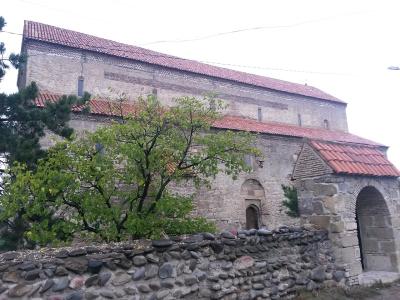
  • Cathedral 5th–6th c.

    Urbnisi Cathedral

    Kareli Municipality, Shida Kartli

    A large three-nave basilica in the village of Urbnisi in Kareli municipality, on the left bank of the Mtkvari, on the site of one of the chief cities of ancient Kartli. Known as the Sioni of Urbnisi and dedicated to Saint Stephen the Protomartyr, it is dated by its style and by the asomtavruli inscription on its north façade, one of the oldest in the Georgian script, to the fifth–sixth century, and was rebuilt in the ninth–tenth century and in 1668. In 1103 Urbnisi, together with Ruisi, hosted the church council of David IV; today it is one of the two principal cathedrals of the eparchy of Urbnisi and Ruisi.

  • Cathedral

    Ruisi Cathedral

    Kareli Municipality, Shida Kartli

    The cathedral of the village of Ruisi in Kareli municipality, a cross-in-square church with a tall twelve-sided dome on the plain of Shida Kartli, beside the Gori–Khashuri highway. Its oldest masonry goes back to the eighth–ninth century; the church was remodelled in the tenth and eleventh centuries and rebuilt after Timur's invasions by King Alexander I (1412–1442). Ruisi was the see of the bishops called Mroveli and one of the two meeting places of the church council of David IV in 1103; today, together with Urbnisi, it is a principal cathedral of the eparchy of Urbnisi and Ruisi.

  • Advertisement
  • Church 1172 Occupied

    Ikorta Church

    Eredvi Municipality, Shida Kartli

    A domed church of the Archangel built in 1172, on a mountain slope at the edge of the village of Ikorta in Eredvi municipality, in the occupied Tskhinvali region. Built by the family of the eristavis of Ksani in the reign of Giorgi III, it is the earliest of the domed churches of Kartli from the turn of the twelfth and thirteenth centuries, in which the canonical form of the Georgian domed church was finally worked out. Its façades and drum are richly carved, and the leaders of the Kakheti uprising of 1659 are buried inside.

  • Cathedral 1030

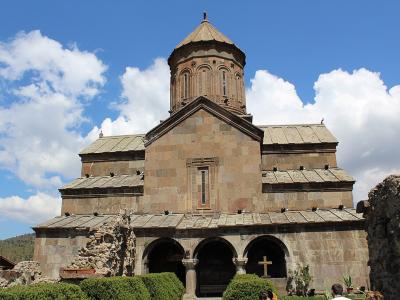
    Samtavisi Cathedral

    Kaspi Municipality, Shida Kartli

    An eleventh-century cross-in-square cathedral in the village of Samtavisi in Kaspi municipality, on the left bank of the Lekhura river. It was built in 1030 by Hilarion, bishop of Samtavisi, and set an example for many churches of medieval Georgia; its five-arched east façade, with a great carved cross, two deep niches and a griffin relief, is one of the best-known works of Georgian architecture. Inside are paintings of 1679, and in the yard a fortified wall with a bell tower, the bishop's palace and the traces of a wine cellar of 1050. Since 2007 the complex has been on the UNESCO World Heritage tentative list.

  • Monastery

    Kintsvisi Monastery

    Kareli Municipality, Shida Kartli

    A medieval monastery in Kareli municipality, on a forested slope of the Dzama valley, 3 kilometres from the village of Qintsvisi. Its main church of St Nicholas, a brick domed building of the early thirteenth century, holds one of the largest and best-preserved medieval Georgian wall paintings: portraits of Giorgi III, Queen Tamar and Giorgi IV Lasha, the celebrated Kintsvisi Angel and backgrounds coloured with lapis lazuli. Beside it stand the small church of St George and the ruins of the church of the Virgin.

  • Church 7th c.

    Ateni Sioni

    Gori Municipality, Shida Kartli

    A cross-domed church of the tetraconch type from the first half of the seventh century, in the Ateni valley by the village of Didi Ateni, on the left bank of the Tana at the edge of a sheer cliff, about 12 kilometres by road from Gori. It resembles the Jvari Monastery of Mtskheta and is dedicated to the Mother of God. Its eleventh-century murals are counted among the landmark works of Georgian monumental painting, and its walls carry many inscriptions of the ninth–eleventh centuries, among them the earliest known Nuskhuri inscription, dated 835.

  • Monastery

    Timotesubani Monastery

    Borjomi Municipality, Samtskhe-Javakheti

    A monastery of the Mother of God in the village of Timotesubani in Borjomi municipality, 18 kilometres from Borjomi, on the right bank of the Gujaretistskali river. Its main church, of the Dormition, was built at the turn of the twelfth and thirteenth centuries by Shalva Akhaltsikheli, lord of Tori, in pinkish “Georgian brick”; inside are wall paintings of 1205–1215, among the most complex of their time, whose conservation won a Europa Nostra medal in 2006.

  • Monastery

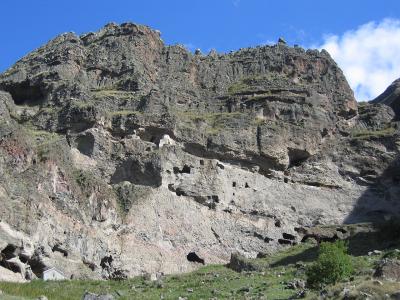
    Vanis Kvabebi

    Aspindza Municipality, Samtskhe-Javakheti

    A rock-cut desert monastery in Aspindza municipality, on the right bank of the Mtkvari, 27 kilometres from Aspindza: a monument of the eighth–sixteenth centuries, with up to 200 caves arranged on 16 levels. The oldest caves date from no later than the eighth century, the domed church of Saint George stands at the centre, and a wall restored in 1204 closes off the monastery yard. On the walls of a small church on the top level are poems written in ink by women in the fifteenth century, among them two stanzas of The Knight in the Panther's Skin.

  • Monastery

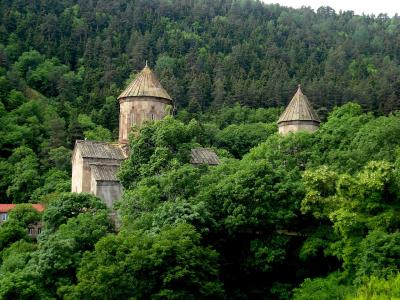
    Zarzma Monastery

    Adigeni Municipality, Samtskhe-Javakheti

    A medieval monastery in the village of Zarzma in Adigeni municipality, in the forested valley of the Kvabliani river, 8 kilometres from Adigeni and 30 kilometres from Akhaltsikhe. It was founded in the eighth–ninth centuries by Serapion of Zarzma, while the present domed church and bell tower were built at the start of the fourteenth century, in the time of Beka I Mandaturtukhutsesi. The church holds portraits of the Jaqeli family and of historical figures of the sixteenth century, and the bell tower is one of the largest in Georgia. Today it is a working monastery.
  • Monastery

    Sapara Monastery

    Akhaltsikhe Municipality, Samtskhe-Javakheti

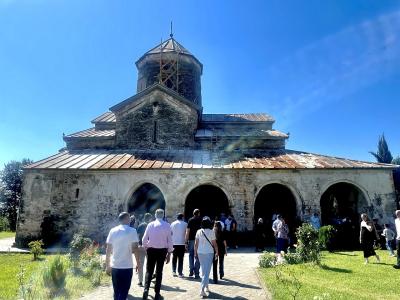
    A medieval monastery in a forested gorge near the village of Ghreli, 10 kilometres from Akhaltsikhe: one of the residences of the Jaqeli lords of Samtskhe and their family burial place. Here stand the tenth-century church of the Dormition, the domed church of St Saba built under Beka Jaqeli at the turn of the thirteenth and fourteenth centuries, one of the oldest bell towers in Georgia, the ruins of a palace and a castle, and fourteenth-century frescoes with portraits of the Jaqeli princes. Today it is a working monastery.

  • Monastery

    Green Monastery

    Borjomi Municipality, Samtskhe-Javakheti

    The monastery of St George at Chitakhevi, popularly called the Green Monastery, stands in a narrow wooded gorge in the village of Chitakhevi in Borjomi municipality, in the south-western part of Borjomi-Kharagauli National Park. The complex consists of a three-nave basilica of the ninth–tenth century and a two-storey bell tower of the fifteenth–sixteenth century. Monks returned in 2003 to the monastery, abandoned for more than two hundred years; the church and the bell tower are Immovable Cultural Monuments of National Significance.

  • Monastery

    Skhalta Cathedral

    Khulo Municipality, Adjara

    A large medieval hall church in the village of Qinchauri in Khulo municipality, in the valley of the Skhalta river, 100 kilometres from Batumi: the centre of the eparchy of Skhalta, with fragments of Palaiologan wall painting of the fourteenth–fifteenth century and a rare image of John the Baptist as a youth; the only medieval church in Adjara that survived both the Ottoman and Soviet periods and became active again in 1990. Its date is disputed: the twelfth century or the middle of the thirteenth.

  • Synagogue

    Oni Synagogue

    Oni Municipality, Racha-Lechkhumi and Kvemo Svaneti

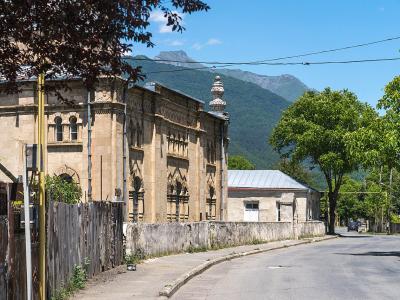
    The third largest and one of the oldest working synagogues of Georgia: an eclectic, Moorish-looking domed house of prayer built of white limestone in Oni in 1895 and compared with the synagogue of Warsaw. Begun on the initiative of Rabbi Elia Amshikashvili, saved from demolition in the 1920s and restored after the earthquake of 1991, it had 3,150 congregants in 1972 and a handful of families today, and has been a monument of national significance since 2006.

  • Church

    Mravaldzali Church of St George

    Oni Municipality, Racha-Lechkhumi and Kvemo Svaneti

    The eleventh-century church of St George in Mravaldzali, the highest village of Racha at 1,840 metres: a hall church of the time of Bagrat III with singular reliefs and inscriptions, held across western Georgia as a place of oaths, once the keeper of the helmet of Jalal ad-Din and the sword of Shah Abbas, given a dome in 1894, brought down by the earthquake of 1991 and restored to its original form in 2009.

  • Church 1753

    Barakoni Church

    Ambrolauri Municipality, Racha-Lechkhumi and Kvemo Svaneti

    One of the last great monuments of the old Georgian domed tradition: the church of the Mother of God that Rostom, eristavi of Racha, had the master Avtandil Shulavreli build in 1753 in the village of Tsesi, on a cliff above the confluence of the Rioni and the Lukhuni. Rectangular, without annexes, its dome resting on the corners of the sanctuary and two pillars, built of stone from Itsi and covered with carving, it is known as the little Svetitskhoveli.

  • Cathedral 1010–1014

    Nikortsminda Cathedral

    Ambrolauri Municipality, Racha-Lechkhumi and Kvemo Svaneti

    The principal church of Racha and one of the summits of Georgian stone carving: a six-apse domed church of St Nicholas raised in 1010–1014 on the order of Bagrat III and standing almost unchanged to this day, with the Transfiguration, the Second Coming and the Exaltation of the Cross on its façades, a 12-window drum, frescoes of the sixteenth and seventeenth centuries, the seat of the bishops of Racha from 1534 and a monument on the UNESCO tentative list since 2007.

  • Monastery

    Mghvimevi Monastery

    Chiatura Municipality, Imereti

    A nunnery cut into the cliff of the Kvirila valley on the eastern edge of Chiatura, founded in the second half of the thirteenth century by Rati Kakhaberidze, eristavi of Racha, his wife Rusudan and his brother Niania: a two-nave basilica of the Nativity of the Mother of God resting on a single massive pillar, a painted wooden iconostasis of the eighteenth century, the eleventh-century Vine Door and Supplication icon now in the National Museum, the rock church of St Catherine with its ram's head, and a great cave where the liturgy is sung on feast days.

  • Monastery

    Ubisa Monastery

    Kharagauli Municipality, Imereti

    Gregory of Khandzta's ninth-century monastery of St George in the Dzirula valley beside the Tbilisi–Kutaisi road: with Simon Chkondideli's four-storey tower-pillar of 1141, a twelfth-century wall and a unique cycle of fourteenth-century frescoes by the painter Damiane or his pupil Gerasime, the only complete example of the Palaiologan renaissance in Georgia; a hermitage known for its monks' honey.

  • Monastery

    Katskhi Pillar

    Chiatura Municipality, Imereti

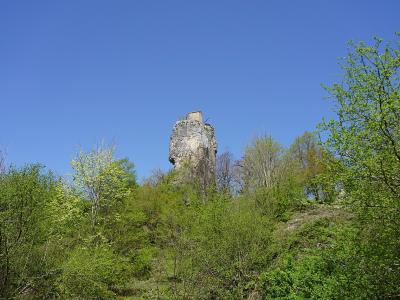
    A 40-metre limestone monolith in the Katskhura valley near Chiatura, the "Pillar of Life", on whose 150-square-metre top stood a hermitage of the ninth to tenth century: the church of Maximus the Confessor, a crypt, three cells and a wine cellar with eight kvevri, unclimbed until 1944, restored in 2005–2009 and inhabited for 20 years by the monk Maxime Kavtaradze; since 2012 climbing the pillar is forbidden.

  • Monastery

    Motsameta Monastery

    Tkibuli Municipality, Imereti

    The "place of the martyrs" on a rocky promontory in a bend of the Tskaltsitela, 6 kilometres from Kutaisi: the relics of David and Constantine Mkheidze, princes of Argveti, tortured to death by Murvan the Deaf in 735–737, whose blood turned the river into "red water"; Bagrat IV's eleventh-century monastery, renewed in 1844–1863 by the Berekashvili builders, with the reliquary, two wooden lions and the passage beneath it for pilgrims.

  • Cathedral 1003

    Bagrati Cathedral

    Kutaisi Municipality, Imereti

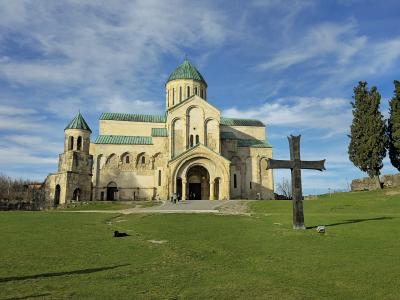
    The cathedral of the Dormition consecrated by Bagrat III in 1003 on Ukimerioni Hill in Kutaisi: the first great cathedral of united Georgia and the place where its kings were crowned, blown up by the Ottomans in 1691, a ruin that Dubois de Montpéreux called "the most remarkable monument in Georgia", controversially rebuilt in 1952–2012 and for that reason struck from the UNESCO list in 2017.

  • Monastery

    Gelati Monastery

    Tkibuli Municipality, Imereti

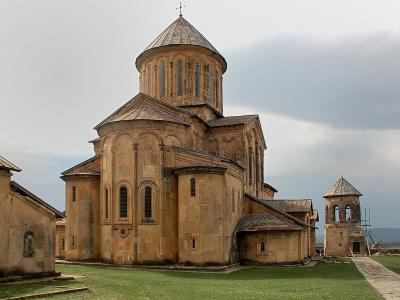
    The royal monastery and academy founded by David the Builder in 1106, 11 kilometres from Kutaisi: a "new Hellas" with Ioane Petritsi and Arsen Ikaltoeli, the mosaic of 1125–1130 in the church of the Virgin, frescoes of the twelfth to eighteenth centuries, the burial place of the kings of Georgia and Imereti with David the Builder's grave and the Ganja gate at the southern entrance; a UNESCO World Heritage site since 1994.

  • Monastery

    Udabno Monastery of Guria

    Chokhatauri Municipality, Guria

    The "Vardzia of Guria": a church of St John the Baptist half cut into the rock and hermits' caves on the slope of Mount Amaghleba on the southern flank of the Guria range, dated by scholars to the sixth or the ninth to tenth century, one of the oldest hermitages of Guria and the library of the ninth-century "Udabno Mravaltavi" and the Bakar Bible of 1743, whose church of 1858 the local authorities pulled down in 1958 for building stone.

  • Monastery

    Jumati Monastery

    Ozurgeti Municipality, Guria

    The monastery of the Archangels Michael and Gabriel on the Guria range above the Supsa valley at 492 metres, from which all of western Georgia comes into view: the bishopric of Jumati of the fifteenth to nineteenth centuries and the seat of the Guria diocese in 1844–1886, home of the eleventh-century icons of the archangels whose enamel medallions are today in the Metropolitan Museum in New York, the Hermitage and the Louvre.

  • Church

    Likhauri Church

    Ozurgeti Municipality, Guria

    A hall church of the Mother of God in dressed stone on the hill in the centre of Likhauri, a rare example of stone carving in Guria, built in 1352 under Kakhaber Gurieli by Takaishvili's and Bakradze's reading, with a bell tower of 1422 bearing an inscription in asomtavruli, a ram's-head relief and the village's old name Rekhoeli; the home of the eleventh-century Likhauri Gospel and the twelfth-century gold icon of St James.

  • Monastery

    Shemokmedi Monastery

    Ozurgeti Municipality, Guria

    The burial ground of the Gurielis and from the fifteenth century a metropolitan see, on a hill above the Bzhuzhi 7–8 kilometres from Ozurgeti: the thirteenth- to fourteenth-century basilica of the Saviour with the fresco of Mamia II Gurieli, the domed "Zarzma" church built in the 1570s for the Transfiguration icon of 886 rescued from Zarzma, and a bell tower renewed in 1831; a treasury of the Georgian church, whose surviving part is in the National Museum.

  • Cathedral 13th–14th c.

    Tsaishi Cathedral

    Zugdidi Municipality, Samegrelo-Zemo Svaneti

    A domed cathedral of the Dormition some ten kilometres from Zugdidi on the first hills above the Colchian lowland: one of the oldest episcopal sees of Georgia, listed as a diocese of Lazica in 602–610; the building of the turn of the thirteenth and fourteenth centuries was restored after the earthquake of 1614 by Bishop Malakia Gurieli, with a tenth-century "palati" and frescoes of the Virgin.

  • Cathedral

    Poti Cathedral

    Poti Municipality, Samegrelo-Zemo Svaneti

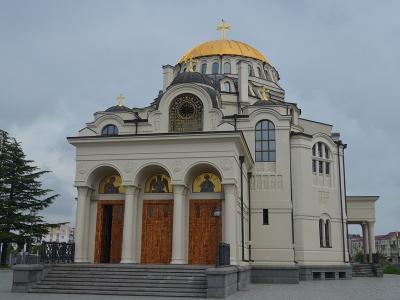
    A reduced copy of Hagia Sophia in the centre of Poti: a neo-Byzantine cathedral for 2,000 worshippers built in 1906–1907 on the initiative of Niko Nikoladze to a design by the architects Zelenko and Marfeld, one of the first uses of reinforced concrete in a church anywhere, and from 1923 to 2005 a theatre.

  • Church 9th–10th c.

    Lamaria Church of Ushguli

    Mestia Municipality, Samegrelo-Zemo Svaneti

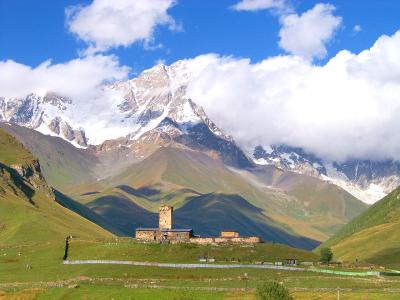
    A hall church of the Dormition of the Mother of God of the ninth and tenth centuries above Zhibiani, at 2,100 metres at the foot of Shkhara: the Christian heir of the Svan cult of Lamaria, with two layers of medieval frescoes, a Svan tower and the legend of the killing of Puta Dadeshkeliani; today the seat of a bishop.

  • Monastery

    Martvili Monastery

    Martvili Municipality, Samegrelo-Zemo Svaneti

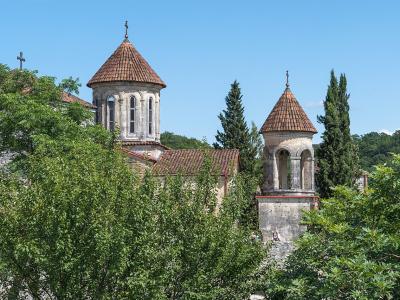
    The seventh-century cathedral of Martvili-Chkondidi on the site of a pagan oak, on the hill above Martvili: from the tenth century the seat of the bishops of Chkondidi and a centre of Georgian letters, a building of the Jvari of Mtskheta type with frescoes of the fourteenth to seventeenth centuries, the burial place of the Dadiani, a monastery revived in 1998 and reached from the town by cable car.

  • Cathedral 10th–14th c.

    Tsalenjikha Cathedral

    Tsalenjikha Municipality, Samegrelo-Zemo Svaneti

    The cathedral of the Transfiguration of the Saviour on a hill at Tsalenjikha, the ecclesiastical centre of the principality of Odishi and the burial place of the Dadiani, whose walls were painted at the end of the fourteenth century for Vameq I Dadiani by the Constantinopolitan master Cyrus Manuel Eugenikos: the only surviving, precisely dated and signed work of the late fourteenth-century Constantinopolitan school.

  • Monastery

    Khobi Monastery

    Khobi Municipality, Samegrelo-Zemo Svaneti

    A thirteenth-century hall church rich in stone carving in the village of Nojikhevi, 4 kilometres from Khobi: the family abbey and burial place of the Dadiani, with frescoes of the thirteenth and fourteenth and the seventeenth centuries and a chapel faced with Byzantine marble that Vameq I Dadiani brought from Zichia; for centuries the monastery kept the robe of the Mother of God; today a convent.

  • Church Occupied

    Church of St Simon the Canaanite

    Gudauta Municipality, Abkhazia

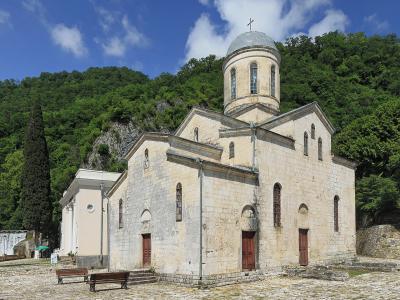
    A cross-domed church of the ninth and tenth centuries in New Athos, in the Psyrtskha valley, dedicated to the apostle Simon the Canaanite, who by tradition was martyred in the grotto nearby: an episcopal seat in the age of the Kingdom of the Abkhazians, raised from ruins in the nineteenth century.

  • Church 10th c. Occupied

    Lykhny Church

    Gudauta Municipality, Abkhazia

    A tenth-century domed church in the village of Lykhny, the old residence of the princes of Abkhazia, with fourteenth-century frescoes, more than a dozen Georgian and Greek inscriptions and a record of Halley's Comet of 1066 cut into its wall.

  • Church 11th c. Occupied

    Church of St George of Ilori

    Ochamchire Municipality, Abkhazia

    An eleventh-century hall church in the village of Ilori, one of the principal shrines of medieval western Georgia, famous for the miracle of the ox on St George's day and notorious for the "restoration" of 2010 that cost it its Georgian inscriptions and its historic appearance.

  • Cathedral 10th c. Occupied

    Mokvi Cathedral

    Ochamchire Municipality, Abkhazia

    A cathedral built in 957–967 by Leon III, king of the Abkhazians, in the village of Mokvi: the seat of the bishops of Mokvi, a centre of Georgian letters from which the Mokvi Gospels of 1300 come, and the family burial place of the Shervashidze princes.

  • Cathedral Occupied

    Dranda Cathedral

    Gulrifshi Municipality, Abkhazia

    An early medieval domed cathedral on the bank of the Kodori, 23 kilometres from Sukhumi, built of brick with a broad drumless dome: the seat of the bishops of Dranda from the tenth to the seventeenth century and, in the judgement of the archaeologist Liudmila Khrushkova, unique of its kind on the eastern Black Sea coast.

  • Cathedral 9th–10th c. Occupied

    Pitsunda Cathedral

    Gagra Municipality, Abkhazia

    A tenth-century cross-domed cathedral at Pitsunda, for centuries the seat of the Catholicoi of Abkhazia and today a concert hall with an organ installed in 1975: the largest early medieval church in Abkhazia.
  • Monastery Occupied

    New Athos Monastery

    Gudauta Municipality, Abkhazia

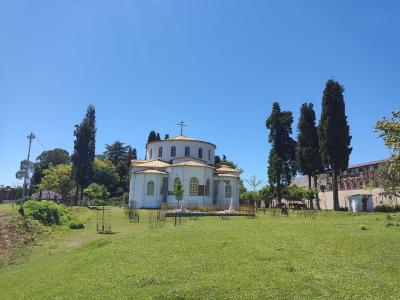
    A monastery built at the end of the nineteenth century by monks from Mount Athos at New Athos in Abkhazia, with the five-domed Cathedral of St Panteleimon, the largest church building in the region.

  • Cathedral Occupied

    Bedia Cathedral

    Gali Municipality, Abkhazia

    An episcopal cathedral in the village of Bedia consecrated in 999 by Bagrat III, the burial place of the first king of united Georgia and of his mother Gurandukht, with three layers of frescoes, asomtavruli inscriptions and the ruins of the palace of the metropolitans of Bedia.
  • Church 12th c.
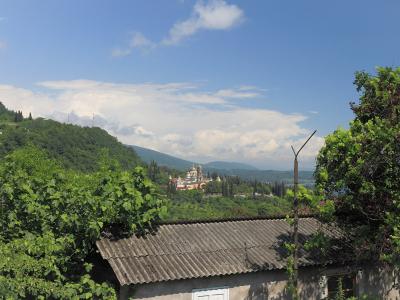
    Jinvali Jvarpatiosani

    Dusheti Municipality, Mtskheta-Mtianeti

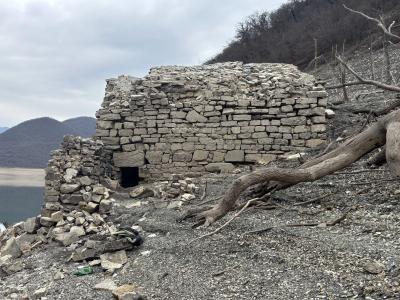
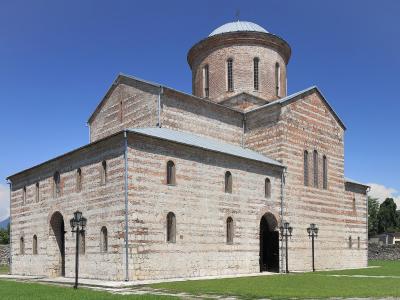
    A High Middle Ages church in Dusheti Municipality that has stood under the Jinvali reservoir since 1985 and comes out of the water for six months of the year.

  • Monastery Occupied

    Otkhara Cave Monastery

    Gudauta Municipality, Abkhazia

    Caves cut in several tiers into a sheer cliff at the foot of the Bzyb range near the village of Otkhara, above the karst source of the Mchishta: by tradition a home of monks and later a refuge of brigands, first explored scientifically in 1958 and dated by its finds to the thirteenth and fourteenth centuries.

  • Monastery Occupied

    Kamani Monastery

    Sokhumi Municipality, Abkhazia

    A monastery north of Sukhumi in the village of Kamani, which tradition links with the death and first burial of St John Chrysostom: rebuilt in the 1980s on the foundations of a medieval church and marked by the tragedy of 1993.

  • Church 19th c.

    Church of St. John the Baptist, Ofreti

    Marneuli Municipality, Kvemo Kartli

    A nineteenth-century church with a projecting apse in Ofreti, a village in Marneuli Municipality close to the border with Armenia; a listed monument since 2015.

Places by region

Pick a region to filter the list
Advertisement