



Tsalenjikha Cathedral
Link copied
Photograph: AlexandreAssatiani (CC BY 4.0), Jaba1977 (CC BY-SA 4.0), Alsandro (CC BY-SA 3.0)
The cathedral of the Transfiguration of the Saviour on a hill at Tsalenjikha, the ecclesiastical centre of the principality of Odishi and the burial place of the Dadiani, whose walls were painted at the end of the fourteenth century for Vameq I Dadiani by the Constantinopolitan master Cyrus Manuel Eugenikos: the only surviving, precisely dated and signed work of the late fourteenth-century Constantinopolitan school.
About
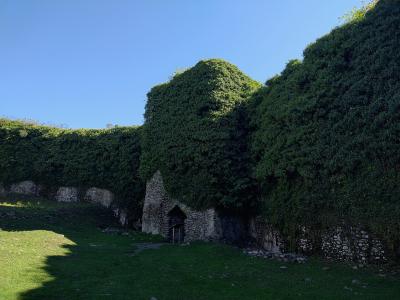
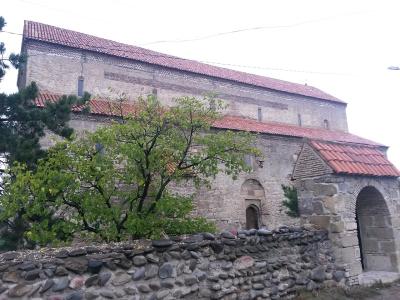
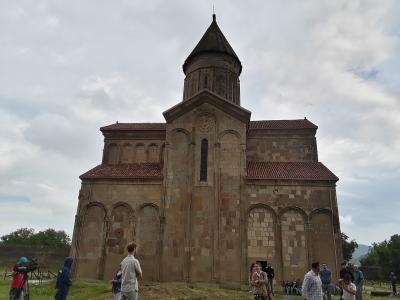
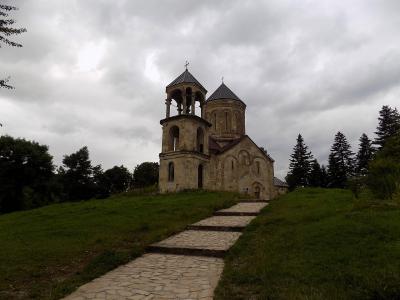
The cathedral of the Transfiguration of the Saviour at Tsalenjikha stands on a raised hill at the edge of the town, on the left bank of the Chanistskali, 30 kilometres from Zugdidi. It is a cross-in-square church with a central dome, a narthex and arcaded galleries built against three sides, of which the northern and southern were converted into burial chapels of the Dadiani; the dome has ten narrow windows in its facets, the church rises on a three-stepped base and is faced with dressed blocks of white stone. On the east is a projecting semicircular apse with three arched windows, and there are entrances on three sides; the façades and windows carry no carving. A long circuit wall surrounds the church, with a two-storey bell tower over the gate in its north-western corner and a half-collapsed tower on the south; outside the wall lie the ruins of the Dadiani palace, an arcaded lower storey on columns whose upper, probably wooden, storey is gone, and from the west of the church runs a tunnel 40–45 metres long and 3–4 metres high, damaged but surviving.
Every interior wall is painted. A bilingual Greek and Georgian inscription on the south-western pier relates that the interior was painted, on the orders of Vameq I Dadiani (mandaturtukhutsesi, prince 1384–1396), by Cyrus Manuel Eugenikos, a painter invited from Constantinople, and a Georgian inscription on the north-western pier names two monks, Makharobel Kvabalia and Andronike Gabisulava, whom Vameq sent to bring the Greek master. It is the only surviving, precisely dated and artist-signed work of the Constantinopolitan school of the end of the fourteenth century and counts among the finest monuments of late Palaeologan art; the iconographic programme is complex and holds details unusual in Georgian wall painting, and the Greek inscriptions on the arches are accompanied by Georgian ones, so local painters assisted the Greek master. In the sanctuary is the Mother of God with Peter, Paul and the archangels, above them the Ascension and the Liturgy, on the west wall the Dormition, on the north wall Vameq I Dadiani with his family. In the seventeenth century the damaged parts were renewed at the behest of Bishop Eudemon Jaiani, and Levan II Dadiani (1611–1657) had a chapel in the west gallery painted, on whose south wall the prince himself, Queen Nestan-Darejan and their children are shown holding a model of the cathedral; Levan II and Nestan-Darejan rest in the chapel. The murals are endangered and need emergency conservation.
- Century
- 10th–14th century (10th–11th by Taqaishvili's dating; galleries and murals of the 14th century)
History
There is no historical record or building inscription for the cathedral; in 1913 Ekvtime Taqaishvili studied it and dated it to the tenth or eleventh century, while the literature also gives the twelfth to fourteenth. In the fourteenth century Vameq I Dadiani added the columned gallery on three sides and had the church painted; the Tsaishi gulani names an abbot Mateoz in the second half of the sixteenth century, and the inscription of a Crucifixion icon names Elise Japaridze. In 1639 the Russian envoys Fedot Elchin and Pavel Zakhariev attended the liturgy in the cathedral, and in 1665 Macarius, patriarch of Antioch, visited it. From the 1640s, by decision of Levan II Dadiani, an episcopal see was founded at Tsalenjikha covering the land between the Enguri and the Khobistskali: its first bishop, Mitropane of Alaverdi, brought here the icon of the Mother of God that had belonged to Queen Ketevan and disputed matters of faith with the Catholic missionaries; Eudemon Jaiani, Maxime Meliadze, Abram and Ilarion of Tsalenjikha followed him, and the see was abolished in the eighteenth century.
In 1678 the Abkhazians ravaged the principality of Odishi and the cathedral, which a certain Giorgi restored with his wife Tatua; in 1762 Katsia II Dadiani granted the cathedral with its serfs and lands to the Catholicosate of western Georgia. In the nineteenth century a new floor was laid and a cobble wall raised on the ruins of the collapsed wall of dressed stone; between the 1960s and 1980s the church was partly repaired and incomplete emergency conservation of the frescoes carried out. The cathedral is a cultural monument of national significance and belongs to the Zugdidi and Tsaishi eparchy of the Georgian Orthodox Church.
Visit info
The cathedral stands on a hill at the edge of Tsalenjikha, on the left bank of the Chanistskali; Tsalenjikha is 30 kilometres from Zugdidi. The church is in use; opening times of the frescoed interior are best checked locally.
Safety
The frescoes are fragile: do not touch them or use flash. Entering the tunnel is dangerous, and the palace ruins are unstable. Dress rules are observed in the working church.
Tip
A torch is essential: Eugenikos's signature is on the south-western pier, Levan's family portrait on the south wall of the west chapel, Vameq's family in the western part of the north wall. Outside the wall see the palace ruins and the mouth of the tunnel. Tsalenjikha fits into one day with the Enguri dam.
Sources
Nearby places
All places in the region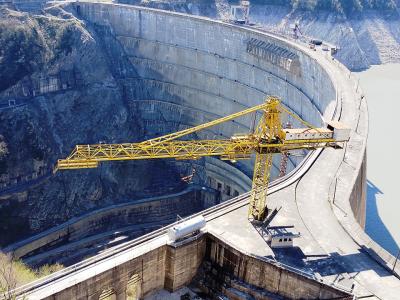
Places of the same kind
Cathedral — all places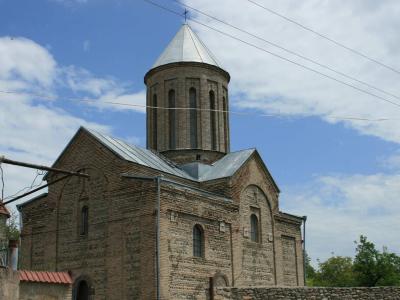
Nearby settlements